India crackdown on illegal slaughterhouses hurts poor most, analysts say


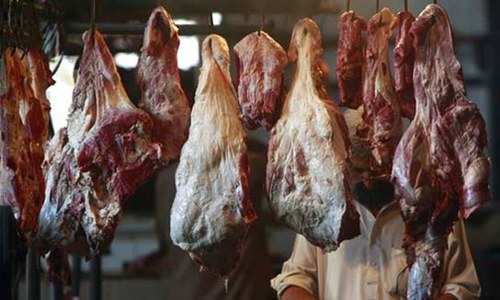
A crackdown on unlicensed abattoirs across India has raised concerns that it is part of a broader effort to shutter informal businesses, hurting poor and vulnerable communities dependent on them.
The northern state of Uttar Pradesh ordered the closure of abattoirs operating without licences this month.
Several more states have followed suit, including Jharkhand, Rajasthan, Uttarakhand, Chhattisgarh and Madhya Pradesh.
There are only 72 licensed abattoirs across the country, with hundreds more operating without government permission. Authorities say they are acting in the interest of public health, hygiene and safety.
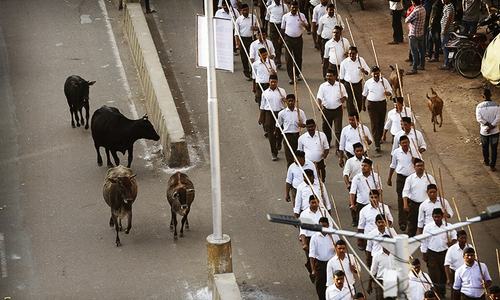
But analysts say the crackdown targets Muslims, who dominate the meat industry, as well as small meat traders and street vendors who are part of India's vast informal economy that is not taxed or monitored by the government.
“Increasingly, informality is being seen as suspect,” said Nikita Sud, an associate professor of development studies at the University of Oxford.
“From street vendors being displaced to slum dwellers who are evicted, to unlicensed slaughterhouses being shut down, it is part of a larger narrative of targeting certain kinds of informality and illegality that invariably affect the poorest, the minorities and other vulnerable communities,” she said.
There are millions of workers in India's informal economy ─ a shadow economy worth at least a quarter of the annual gross domestic product, according to the World Bank.
It includes daily wage earners, domestic workers, construction workers, leather tanners and those dependent on abattoirs.
Despite a law to protect street vendors and a move to provide welfare benefits to informal workers, most have few rights or protections, even though they provide cheap products and services for millions of people.
Indian Prime Minister Narendra Modi's government has taken steps to regulate more of the economy in order to widen the tax base and generate more revenue for development projects to spur growth.
But these policies have hurt society's most vulnerable, say campaign groups.
The government's decision in November to withdraw high-value rupee bills from circulation to crack down on corruption and counterfeit currency hurt rural women and informal workers particularly hard, as most of them are outside the banking system.
The western state of Maharashtra recently passed a law requiring street hawkers to have lived in the state for 15 years before they can apply for a licence, a move seen as targeting poor migrants.
“Our cities are becoming increasingly hostile towards the poor,” said Arbind Singh at the National Association of Street Vendors of India.
“This (abattoir) crackdown not only targets small shop owners, but also buyers who are poor and cannot afford big shops. Our vision for our cities has no room for the poor, the vulnerable.”