A WANTED man is now in official police custody and justice may yet be done.
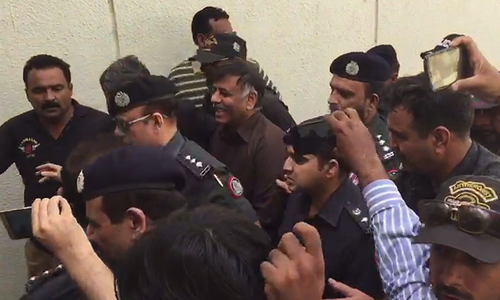
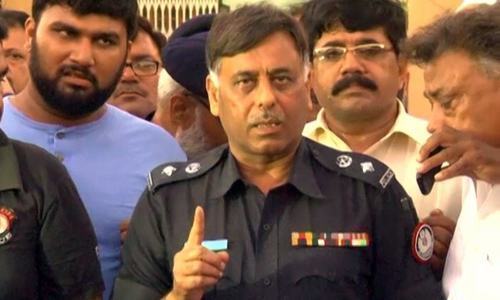
The adamant pressure applied by Chief Justice of Pakistan Saqib Nisar finally delivered Rao Anwar, the disgraced Karachi police officer who is suspected of involvement in the murder of Naqeebullah Mehsud, to Courtroom No 1 in Islamabad on Wednesday.
Mr Anwar was transferred to Karachi the same evening on the chief justice’s orders, and yesterday, the police officer was produced before an anti-terrorism judge in the provincial capital.
Dawn Investigation: Rao Anwar and the killing fields of Karachi
Arguably, without Chief Justice Nisar’s personal oversight of the search for the missing policeman, who was in hiding for two months, seemingly out of the collective reach of the country’s entire security apparatus — civilian and military — Mr Anwar would either be still at large or have found a way to escape abroad.
Interventions by the superior judiciary to protect the rights of the defenceless or punish the powerful who prey on the weak are occasionally justifiable and uncontroversial. The arrest of Rao Anwar is one of those positive instances.
Yet, the manner in which Mr Anwar appeared in the Supreme Court has raised a number of questions.
Clearly escorted by the Islamabad police and the anti-terrorism police, there has been no explanation offered for where he arrived from and how he came to be in the presence of a significant law-enforcement detail.
Mr Anwar’s mysterious disappearance is no ordinary matter. He is the prime suspect in a murder that has captured the nation’s attention and spawned an unprecedented protest movement.
No less a figure than the chief justice ordered his arrest, but for two months no intelligence, security or law-enforcement agency in the country was able to inform the Supreme Court of Mr Anwar’s whereabouts.
Yet, the fugitive policeman was able to have letters delivered to the Supreme Court, and frequently communicated with the media. If it was not complicity on the part of some state elements, then it was gross incompetence by the security and intelligence apparatus that allowed Mr Anwar to evade official arrest for two months. The public deserves to know more.
If Mr Anwar’s trial is to become a watershed in our criminal justice and policing systems, sweeping reforms will have to be enacted.
A path-breaking report in this newspaper has documented Mr Anwar’s enormous criminal empire in Karachi and how a willingness to work for some powerful state elements and the political set-up shielded him from action.
His reign of terror in Karachi, however, was surely not the only one of its kind in the country. Criminal enterprises hiding in the folds of the state must be found and removed everywhere.
Published in Dawn, March 23rd, 2018