'This is not our country': Rohingya refugees prepare to spend their first Ramazan away from home


The 12-year-old Rohingya refugee dreamed of Ramazan back in his own village — fish to break the day's fast, gifts from his family and relaxing beneath the trees before evening prayers at the mosque.
But for MD Hashim and others like him living in squalor in Bangladesh, the start of the Islamic holy month now serves as a bitter reminder of everything they have lost since being driven from Myanmar in an army crackdown.

“Here, we can't afford gifts and don't have good food... because this is not our country,” Hashim told AFP on a barren hillside in Cox's Bazar district.
The United Nations has described the army purge against the persecuted minority as ethnic cleansing, and thousands of Rohingya Muslims were believed to have been slaughtered in the pogrom that began last August.
Also read: After massacres and rape, food being used as a weapon against Rohingya in Myanmar
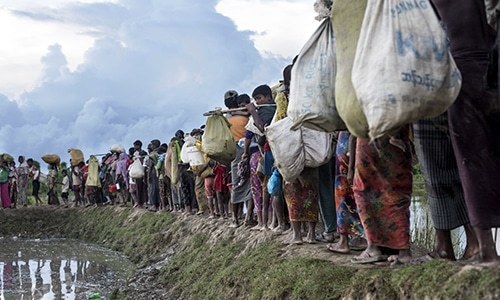
Nearly 700,000 Rohingya fled the violence for Bangladesh, where they squat in bamboo and tarpaulin shacks on dirt slopes.
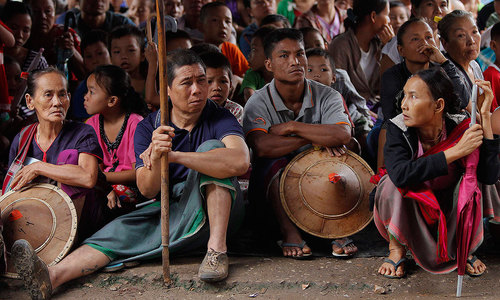
While they acknowledge that they were lucky to escape, now, with food and money scarce and temperatures soaring, Ramazan looms as a source of anxiety for many Rohingya.

Sitting inside a plastic tent on a blazing day, Hashim fondly recalled the simple pleasures that made Ramazan the most exciting time of year in his village.
Each night, friends and family would break the fast together with fish and meat dishes cooked just once a year for the Islamic holy month.
New clothes would be offered and sprinkled with traditional perfumes called “attar” to mark the holiday, he said.
“We can't do the same here, because we don't have money. We don't have our own land. We can't earn money because we are not allowed,” Hashim said.
Rohingya refugees: repatriation or resettlement?
The Rohingya are barred from working and more than two dozen military checkpoints restrict them from leaving what has grown into the world's largest refugee camp.
They rely on charities for everything from food and medicine to clothing and housing materials. Hashim must walk over an hour in the searing heat to reach the nearest market.
Scorching heat
He said many young Rohingya were also anxious about giving up food and water amid the scorching temperatures in the camp.
In the past, Hashim relished joining his friends for the annual act of devotion, as they were able to rest in the cool shade of trees between their chores.
“We cannot fast here like we did back in Burma (Myanmar), because it's too hot. There are no trees,” he told AFP.
“The tarpaulin is hot, and it gets hotter when the sun is beating down. It will be very difficult.”
Even so, Hashim is one of the fortunate ones, able to celebrate with his family. Other Rohingya children will spend Ramazan not just away from home, but alone.
Thousands crossed into Bangladesh without parents or family, either separated in the chaos or orphaned by the violence and disease that defined the mass exodus from Myanmar.

“Unfortunately, it will be their first Ramazan to remember for the wrong reasons,” Roberta Businaro from Save the Children told AFP in Cox's Bazar.
“They will only have dirt and mud and dust to play with. They will be spending a Ramazan away from their home, from their parents and from their friends.”
The Quran exempts the ill, elderly and others who cannot fast from giving up food and water.
But despite the hardship, the Rohingya would not abandon their traditions, no matter how challenging their circumstances, said imam Muhammad Yusuf.
“It will be difficult while the sun is so hot, but we will still fast,” Yusuf told AFP.