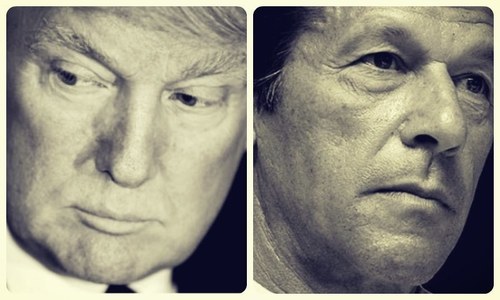
The US has delivered an object lesson in how not to conduct diplomacy.
Mere days ahead of a short visit by US Secretary of State Mike Pompeo to Pakistan, the US Department of Defence has announced a permanent aid cut to Pakistan of $300m. The move has surely been coordinated across the Trump administration and now what remains to be seen is if Secretary Pompeo will try and bully the Pakistani leadership during his visit or if he will be deployed in a more traditional good-cop diplomatic role.
The aid cut-off is not new and has already been factored into budgetary estimates, so perhaps the measure is designed to placate hawks inside the Trump administration. But it will surely rankle in Pakistan and rightly so: more than the aid, it is the hectoring and aggressive tone of the Trump administration towards Pakistan combined with an apparent disregard for a peace process in Afghanistan that is a problem.
Yet, Pakistan ought to react cautiously and avoid unnecessary public wrangling. The US aid cut-off has come on the heels of Iranian Foreign Minister Javad Zarif’s warm visit to Pakistan in which the latter emphasised its support for Iran and the nuclear deal that the US unilaterally pulled out of. That could be a factor in the Trump administration’s apparent pique at Pakistan. Moreover, Pakistan is almost sure to shortly turn to international creditors and the US has already indicated a willingness to overtly bring geopolitics into the workings of the IFIs.
But a cautious public reaction can be accompanied by a robust defence in private. The focus in Afghanistan should be a peace process with the Afghan Taliban, and while Pakistan has consistently expressed an interest in supporting a peace process, it can only do so much in the face of political disarray in Afghanistan and reluctance in the US to engage the Taliban in dialogue.
The US and Taliban may be locked in a different kind of race now: both are trying to maximise their advantage on the battlefield to win greater concessions from the other side at the dialogue table. If that is in fact what the US is aiming for, Pakistan can emphasise the role it can play to facilitate a dialogue among the Taliban, the Afghan government and the US.
The longest war in US history will not change dramatically in military terms, but political support for the war in the US can only further deteriorate. President Donald Trump clearly only reluctantly agreed to extend the war in Afghanistan and is reported to be frustrated with the lack of progress that he was promised by his generals.
Secretary Pompeo and US national security and military officials ought to stop pursuing counterproductive strategies and work towards the common international goal of ending the war in Afghanistan and blunting the IS threat.
Published in Dawn, September 3rd, 2018