Govt approves Rs660bn development projects


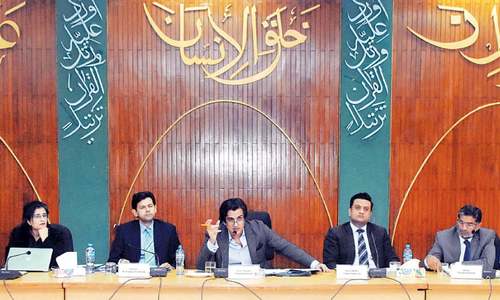
ISLAMABAD: The Executive Committee of the National Economic Council (Ecnec) on Wednesday approved six development projects worth about Rs660 billion, five of them from the water and power sector.
The meeting presided over by Finance Minister Asad Umar jacked up the costs of the ruling Pakistan Tehreek-i-Insaf’s signature transport project for Peshawar — Bus Rapid Transit (BRT) — by 38pc and that of Diamer-Bhasha dam project by 1pc.
The meeting approved a proposal of the Ministry of Water Resources to include Tangir Hydropower in the Diamer-Bhasha dam project that increased its cost by about Rs5bn — from previously approved cost of Rs474bn to new revised cost of Rs479.68bn.
Ecnec increases Peshawar mass transit project cost by 38pc
Informed sources said the additional cost for 15MW Tangir Hydropower Project was approved at the request of the Water and Power Development Authority to meet energy requirements during construction period of the Diamer-Bhasha dam. Wapda had estimated the cost of the small hydropower project at Rs6bn. But, the sources said, the Planning Commission had raised serious objections over the cost of the project, saying it was almost three times as costly as a normal hydropower project.
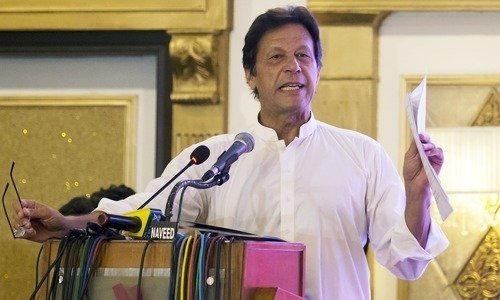
The Wapda management is reported to have taken up the issue with Prime Minister Imran Khan and told him that power supply from the national grid to Diamer-Bhasha over seven to eight years of construction period was estimated to cost about Rs10bn.
The Ecnec was updated on the Peshawar Sustainable Bus Rapid Transit (BRT) Corridor Project with a request to increase its cost by Rs38pc as referred by the Central Development Working Party (CDWP) last month.
The meeting approved the revised cost of the project of Rs66.43bn, with June 2019 as the stipulated month of completion of the project. The Khyber Pakhtunkhwa government reported that some funds would be required for a soft opening of the project, to be held in March next year.
The project envisages construction of 27.37km dedicated signal-free BRT corridor, out of which 11.85km will be on ground, 12.26km elevated and 3.25km through underpasses. In addition to the main BRT corridor, additional elevated structures having total length of 2.1km will be constructed.
The CDWP had referred the Peshawar BRT project to Ecnec with a revised cost estimate of Rs67.95bn and with an advice for its cost rationalisation, which was now approved at Rs66.43bn against original approved cost of Rs49.3bn.
The project aims at building high-quality mass transit for Peshawar to trigger urban development, activities and density along the BRT corridor improving economic growth besides giving access into the city.
The project, originally planned to be executed in 12 months, is already beyond schedule and is expected to facilitate 472,000 people per day in its initial phase. It starts from Chamkani on G.T. Road and terminates at Karkhano Market on Jamrood Road. It was launched in December 2017 for completion in one year, but is now expected to be completed in March next year.
The meeting also approved a transmission line project for power evacuation from hydropower projects of 870MW Suki Kinari in KP’s Mansehra district, 1,124MW Kohala in Muzaffarabad district of Azad Jammu and Kashmir and 590MW Mahal in Bagh District in AJK, at a cost of Rs79.92bn. The main objective of the project is construction of 500kV transmission network involving a total distance of more than 750km up to Lahore to provide interconnection facilities for evacuation of electricity from the above mentioned projects being constructed under the China-Pakistan Economic Corridor.
Ecnec also approved Sind Solar Energy Project at a cost of Rs12.84bn. The project aims to support the scale up of solar power in the province and increased access to electricity. The project is expected to also improve energy security and fulfil Pakistan’s international commitments on climate change.
The meeting directed the power division to furnish a report covering all facets relating to power production, its effective evacuation/transmission and distribution. The report, Ecnec observed, would help set a direction for undertaking power projects in future.
Ecnec also approved rehabilitation project of Dargai hydroelectric power station in Malakand, KP, at a cost Rs4.050bn. Completion of the project will help enhance the capacity of the power station to 22 MW.
The council also approved the Balochistan Water Resource Development Project (Zhob and Mula river basins) at a cost of Rs16.453bn. The project will benefit districts of Muslim Bagh, Qila Saifullah, Zhob, Khuzdar, Jhal Magsi and part of Kalat.
Published in Dawn, November 15th, 2018