ONCE again, political forces are wrangling over Karachi.
Tensions had already been brewing between the federal government and Sindh over the formation of a ‘strategic committee’ for the mismanaged city by the prime minister, with the province feeling that Islamabad was encroaching on its turf.
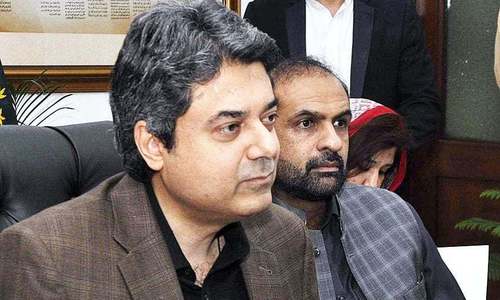
However, matters took a dramatic turn on Wednesday night when Federal Law Minister Farogh Naseem said that the centre may take over Karachi’s administrative affairs under Article 149 of the Constitution. Although the minister later clarified that he was quoted out of context, the statement elicited a sharp reaction from PPP chief Bilawal Bhutto-Zardari, who accused the centre of trying to ‘occupy’ Karachi.
There is no doubt that Karachi is a mess. Its solid waste disposal, sewerage, public transport and traffic systems have practically collapsed. Crime is rampant. It is not surprising then that this metropolis regularly ranks among the world’s least liveable cities.
All three tiers of government — federal, provincial and local — are responsible for this pitiful state of affairs.
The city did see some development and improved service delivery during the Musharraf era, under the mayorships of Niamatullah Khan and Mustafa Kamal. But since then, it has been largely downhill, especially after the PPP changed the Sindh local government law in 2013, taking away many powers of the local bodies.
Be that as it may, it is inadvisable for the federation to take direct control of Karachi, even if it believes Article 149 enables it to do so. Such a move will set a dangerous precedent, and can be used elsewhere in the country to roll back the gains of the 18th Amendment.
Devolution may not be working perfectly, but the solution lies in strengthening provincial capacity, not increasing centralisation. Moreover, if the centre goes ahead with its move, it will add to ethnic problems in Sindh and increase the rural-urban divide.
Without doubt, Karachi needs help; but the way to provide this should be to empower the local governments, with the provincial setup maintaining checks and balances, and the federation overseeing the process.
All tiers of government should act within their defined parameters, while local governments need to be given the powers and finances to carry out civic duties. There is no need for experiments; good governance can deliver if all parties do their job.
Published in Dawn, September 13th, 2019