SARS-like virus spreads in China, nearly 140 new cases


A mysterious SARS-like virus has killed a third person, spread around China and reached a third Asian country, authorities said on Monday, fuelling fears of a major outbreak as millions begin travelling for the Lunar New Year in humanity's biggest migration.
The new coronavirus strain, first discovered in the central Chinese city of Wuhan, has caused alarm because of its connection to Severe Acute Respiratory Syndrome (SARS), which killed nearly 650 people across mainland China and Hong Kong in 2002-2003.
Wuhan has 11 million inhabitants and serves as a major transport hub, including during the annual Lunar New Year holiday which begins later this week and sees hundreds of millions of Chinese people travel across the country to visit family.
A third person was confirmed to have died and 136 new cases were found over the weekend in Wuhan, the local health commission said, taking the total number of people to have been diagnosed with the virus in China to 201.
South Korea on Monday reported its first case — a 35-year-old woman who flew in from Wuhan. Thailand and Japan have previously confirmed a total of three cases — all of whom had visited the Chinese city.
No human-to-human transmission has been confirmed so far, but authorities have previously said the possibility “cannot be excluded”.
Health authorities in Beijing's Daxing district said two people who had travelled to Wuhan were treated for pneumonia linked to the virus and are in stable condition.
In southern Guangdong province, a 66-year-old Shenzhen man was quarantined on January 11 after contracting a fever and showing other symptoms following a trip to visit relatives in Wuhan, the provincial health commission said. He is also in stable condition.
Shenzhen officials said another eight people were under medical observation.
“Experts believe that the current epidemic situation is still preventable and controllable,” the Guangdong health commission said.
Five other people have been put in isolation and tested in eastern Zhejiang province.
At Beijing's crowded central railway station, some travellers wore masks as a precaution but were not too concerned about the virus.
“Watching the news, I do feel a little worried. But I haven't taken precautionary measures beyond wearing regular masks,” said Li Yang, a 28-year-old account manager who was heading home to the northern region of Inner Mongolia for the Lunar New Year.
A 26-year-old woman surnamed Guo, who was heading to northeast Liaoning province, said she and her friends generally avoided crowded areas and have been reminding each other to wear masks.
Detection measures
A seafood market is believed to be the centre of the outbreak in Wuhan, but health officials have reported that some patients had no history of contact with the facility.
The World Health Organisation (WHO) said on Twitter Monday that “an animal source seems the most likely primary source” with “some limited human-to-human transmission occurring between close contacts”.
It said the new cases in China were the result of “increased searching and testing for (the virus) among people sick with respiratory illness”.
Scientists with the MRC Centre for Global Infectious Disease Analysis at Imperial College in London warned in a paper published on Friday that the number of cases in the city was likely to be closer to 1,700, much higher than the number officially identified.
Wuhan authorities said they have installed infrared thermometers at airports, railway stations and coach stations across the city. Passengers with fevers were being registered, given masks and taken to medical institutions.
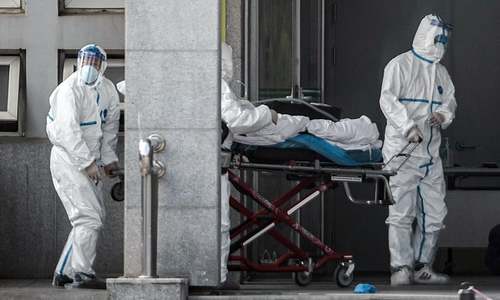
State TV footage aired Monday showed medical staff working inside an isolation ward at a Wuhan hospital in full body suits.
Authorities in Hong Kong have also stepped up virus detection measures at border crossings, including rigorous temperature checks for inbound travellers from the Chinese mainland.
Passengers are also being screened at some airports in Thailand and the United States.
In Wuhan, 170 people are still being treated at hospital, including nine in critical condition, the city health commission said, adding that 25 people have been discharged so far.
Chinese state media moved to calm the mood as discussion about the coronavirus spreading to other Chinese cities swelled on social media.
Nationalist tabloid Global Times called for better handling of the new virus than that of the 2003 SARS outbreak.