Critical Covid-19 patient in Hyderabad administered 'experimental' plasma therapy


A critical coronavirus patient in Hyderabad has been administered an experimental therapy involving injecting convalescent plasma for passive immunisation to treat the disease, it emerged on Sunday.
The development was confirmed by the Liaquat University Hospital (LUH) isolation ward's focal person Dr Aftab Hussain Phull.
Does plasma therapy treat Covid? Is it safe? Here's all you need to know about the approach
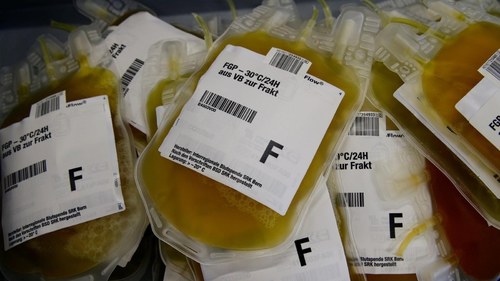
The plasma — donated by a recovered coronavirus patient to the Diagnostic and Research Laboratory at the Liaquat University of Medical and Health Sciences — was administered to a patient under treatment at the isolation ward.
"He was given the plasma after managing his condition as best as possible under the given circumstances," Phull said.
On April 30, the Sindh government had allowed three hospitals in the province to carry out clinical trials for the “experimental use of Covid-19 convalescent plasma for passive immunisation".
The hospitals included the Dr Ruth Pfau Civil Hospital in Karachi, the National Institute of Blood Diseases (NIBD) in Karachi and LUH, a government facility in Hyderabad.
Prior to this, the government had approved clinical trials for plasma therapy in addition to approving locally made ventilators for treating critically ill patients and granting permission for manufacturing sanitisers and producing chloroquine.
What is plasma therapy?
The experimental therapy involves collecting blood from someone who has recovered from Covid-19 and transfusing separated plasma to a critically sick patient; plasma is the clear part of blood that is left when blood cells have been removed and contains antibodies and other proteins.
The transfusion of plasma with its antibodies provides a form of 'passive immunity' to the sick recipient to fight the infection.
The protection offered by passive immunisation, however, is short-lived, usually lasting only a few weeks or months.
The science behind plasma therapy and passive immunisation is not new; the concept has been widely applied for treating different infectious diseases including mumps, measles and polio.