Rise in leopard population on Margalla Hills linked to healthy ecosystem: IWMB

ISLAMABAD: The Islamabad Wildlife Management Board (IWMB) on Tuesday linked the increase in population of leopards dwelling in Margalla Hills National Park (MHNP) to “plenty of game”.
“Unlike Ayubia, no case of attacks on livestock has been reported there. This is because there is a significant wild boar and monkey population along with barking deer,” said IWMB Chairperson Rina Saeed Khan.
Talking to Dawn, Ms Khan said there were five leopards in the hills which was testament to the fact that the national park had a healthy eco-system, however, it must be noted that the animals inhabit the hills permanently.
“This is in no way an invitation that visitors should come and see the leopards. The public is being informed to trek and hike in groups and return before sun down when trekking on trails 4 and 6,” Ms Khan said.
According to IWMB, the leopards roam between trails 4 and 6.
They sleep through the day and come out after dark. With the opening of trail 4, trekkers need to keep in mind that it is human beings that are encroaching the animals’ home, she said, adding that it will take a while before leopards get used to the presence of humans on their turf.
“In case hikers do come face to face with a leopard, running is not an option instead one should freeze and show no signs of fear,” she added.
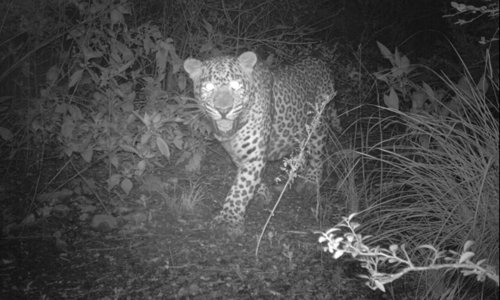
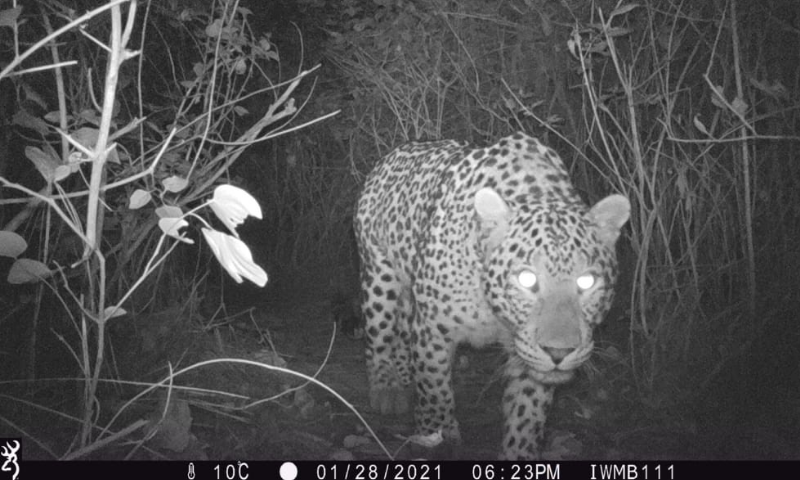
On Sunday, the IWMB released images of a female common leopard named Shezadi found to be a permanent resident of the territory between trails 4 and 6 inside MHNP. Shezadi was caught on camera after traps were set up by IWMB staff for several evenings in a row in late January.
Leopards patrol and control 50 square km of the territory, Ms Khan said.
The areas, wherein IWMB has been setting camera traps since 2019 are inhabited by at least five individual common leopards.
“Shezadi is now familiar with the trails that humans take and avoids them during the day. Most attacks by leopards on humans are in self defence — intentional attacks are rare,” she specified.
The common leopard is a critically endangered species and top predator of the park and is also very territorial by nature.
The IWMB with assistance from the Capital Development Authority (CDA) is installing fences and gates around trail 4, which will be shut after sunset. Trail 4 was opened earlier in January to control over crowding on other trails and monitor illegal cutting of wood.
Published in Dawn, February 3rd, 2021