Empowering the women workforce

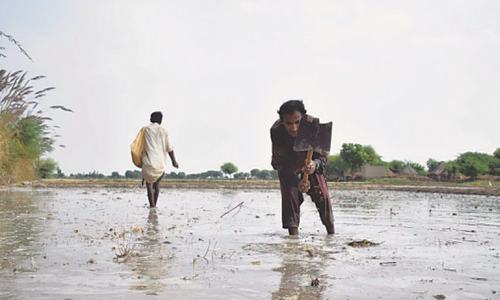
Most of the 17 Sustainable Development Goals of Agenda 2030 are related to agriculture in one way or the other — be it hunger, poverty, climate action, gender equality, health, clean water, responsible production, life on land, life below water, etc. But, unfortunately, Pakistan has failed to be on track to achieving these goals despite having the potential.
Despite the shortfalls Aamer Hayat Bhandara, a progressive farmer, sees a silver lining in the youth bulge in the 70 per cent population living in rural areas, a majority of which is directly or indirectly related to farming. “It is easier to teach and persuade this young generation a sustainable agriculture model than the elderly ones,” he says, pointing to the overwhelming response the 10-billion Tree Tsunami call received from the youth because they understood their responsibility for the future.
“A 60-plus farmer usually doesn’t go for a soil analysis to use farm inputs. Rather he will insist on his ‘time-tested’ past practice. While a younger one will look for his land data before applying the inputs,” he elaborates.
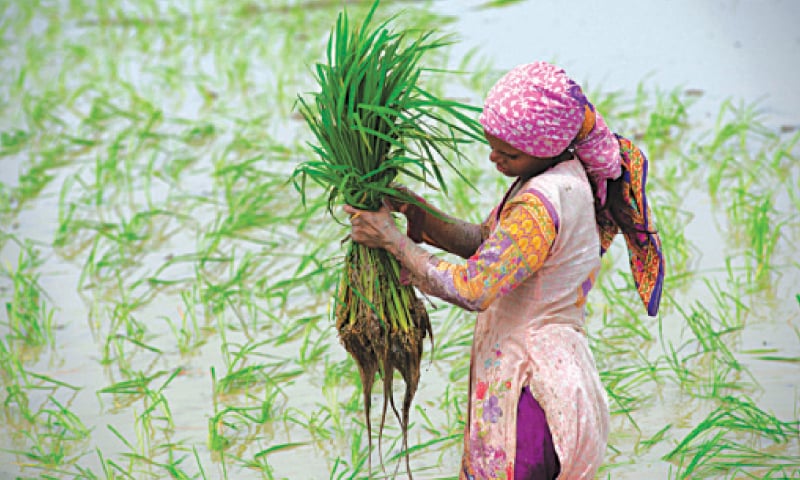
Since up to 65pc of women in Pakistan are engaged in subsistence-level farming, improving their access to resources may increase agriculture output by 30pc
Mr Bhandara asserts that the private sector is important and has had more potential to deliver on the SDGs front. “Unlike the public sector, which is deficient in resources and manpower, the private sector has the required resources and a will to excel in the field. What it lacks is an effective regulatory framework. If the government supports it through long-term policies and laws, it may work wonders.”
The private sector can and should carry out research to prepare a sustainable agriculture model under a public-private partnership that may be replicated in other sectors as well, he argues.
Asma Mohsin, a public policy scholar, advocates for focusing on gender equality in the agriculture sector to achieve the objective of SDGs easily and speedily.
She claims that up to 65pc of women in Pakistan are engaged in subsistence level, low or unpaid farming and improving their role in decision-making and access to resources like credit, land ownership and extension services, etc may increase agriculture output by 30pc per household without any major investment.
Because women spend 80 to 90pc of their earnings on household needs for food, nutrition, education and healthcare, etc, increasing their income will mean attaining these and other goals of agenda 2030, she maintains.
Ms Mohsin calls for preparing gender-disaggregated data on contributions of and constraints on women farmers to help mainstream gender into agriculture policies and practices, as well as removing social, economic, environmental and institutional biases against them to unleash their full potential in the sector and thus attaining SDGs.
Published in Dawn, The Business and Finance Weekly, September 27th, 2021