WHO, Unicef launch Afghan polio vaccine campaign with Taliban backing


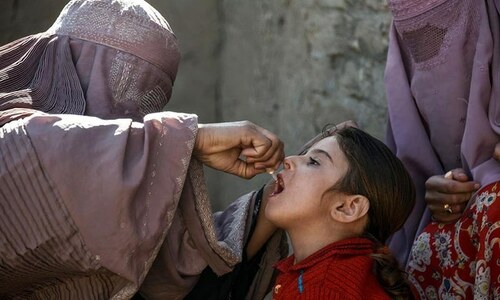
The World Health Organization (WHO) and the United Nations children's agency kicked off a polio vaccination campaign in Afghanistan on Monday, the first nationwide campaign to fight the disease in three years.
Naikwali Shah Momim, the National Emergency Operations Coordinator for the polio programme at Afghanistan's health ministry, told Reuters the campaign had started in various parts of the country on Monday, but added there were several hurdles around a shortage of trained staff.
The campaign, which is aimed at reaching over 3 million children, had received Taliban backing, which would allow teams to reach children in previously inaccessible parts of the country, the WHO said.
“The urgency with which the Taliban leadership wants the polio campaign to proceed demonstrates a joint commitment to maintain the health system and restart essential immunisations to avert further outbreaks of preventable diseases,” said Ahmed Al Mandhari, WHO Regional Director for the Eastern Mediterranean, in a statement.
However, Momim said that more training was needed for teams in remote areas, so the programme would initially start in places such as Kabul.
Afghanistan and Pakistan are the last countries in the world with endemic polio, an incurable and highly infectious disease transmitted through sewage that can cause crippling paralysis in young children.
Polio has been virtually eliminated globally through a decades-long inoculation drive. But insecurity, inaccessible terrain, mass displacement and suspicion of outside interference have hampered mass vaccination in Afghanistan and some areas of Pakistan.
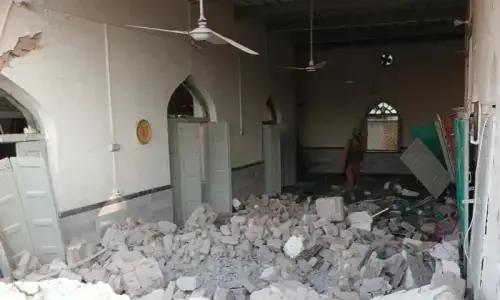
Several polio workers have been killed by gunmen in eastern Afghanistan this year, though it was not clear who was behind the attacks.
According to WHO figures compiled before the collapse of the Western-backed government in August, there was one reported case of the one wild poliovirus type 1 (WPV1) in Afghanistan in 2021, compared with 56 in 2020.
Until the disease is eliminated completely, it remains a threat to human health in all countries, especially those with vulnerable health systems because of the risk of importing the disease, according to health experts.