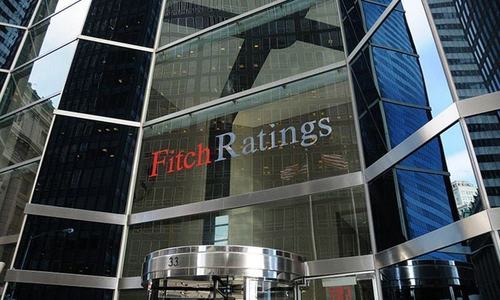
Reforms offset Pakistan’s surging external risks, says Fitch Ratings


ISLAMABAD: Fitch Ratings says that Pakistan’s recent policy adjustments and demonstrated access to external financing, as well as its commitment to a market-determined exchange rate, offset rising external risks from a widening current account deficit.
The Hong Kong-based Fitch Ratings said on Wednesday that the ongoing reforms, if sustained, could create positive momentum for the sovereign’s ‘B-‘ (B minus) rating, which it affirmed in May this year with a stable outlook.
Referring to the staff-level agreement reached between Pakistan and the International Monetary Fund (IMF) on Nov 21 on the sixth review of Extended Fund Facility (EFF), Fitch believes the reforms include amending the State Bank of Pakistan Act to formalise the central bank’s institutional independence and removing some tax exemptions.
It expects that the IMF will release a further $1 billion in funding, provided certain prior actions are met.
The authorities sustained reform efforts and commitment to the IMF programme should support access to external financing, even with global financing conditions potentially becoming more challenging for emerging markets in 2022 as global monetary policy settings grow less accommodative.
“If the government retains its commitment to a market-driven exchange rate, we believe this would be a useful shock absorber to help contain external risks in the longer term,” says Fitch Ratings which is a leading provider of credit ratings, commentary and research for global capital markets.
An exchange rate that supports the price competitiveness of Pakistan’s exports could over time help to reduce the country’s reliance on debt financing to balance its external accounts, which remains a credit weakness. In addition, fiscal consolidation under the EFF could help reduce external imbalances by dampening imports, while also reducing the drag of weak public finances on Pakistan’s rating, it says.
Fitch says increases in global energy prices and a strong domestic recovery from the initial Covid-19 pandemic shock have put additional strains on Pakistan’s external position.
The current account deficit in the financial year to June 2022 is set to be wider than the agency’s previous forecast of 2.2 per cent.
Published in Dawn, November 25th, 2021