ISLAMABAD: The World Bank has announced its decision to resume the two separate processes requested by Pakistan and India in relation to the Kishenganga and Ratle hydroelectric power plants, in line with its responsibilities under the Indus Waters Treaty.
The decision has been formally communicated in letters to India and Pakistan, a World Bank press release said. The two countries disagree over whether the technical design features of the two hydroelectric plants contravene the Indus Waters Treaty.
Pakistan had asked the World Bank to facilitate setting up a Court of Arbitration to consider its concerns about the designs of the two hydroelectric power projects, while India asked for the appointment of a Neutral Expert for the same purpose.
In December 2016, the World Bank declared a pause in the two separate processes to allow the two countries to consider alternative ways to resolve their disagreements. Since then, the World Bank has encouraged and worked with both countries to seek an amicable resolution. Multiple high-level meetings have been convened and a variety of proposals have been discussed.
The World Bank continues to share the concerns of the parties that carrying out the two appointments concurrently poses practical and legal risks. However, the lack of success in finding an acceptable solution over the past five years is also a risk to the treaty itself.
In deciding to resume the two processes, the bank has carefully considered the views of all parties involved. The World Bank remains committed to acting in good faith and with complete impartiality and transparency while continuing to assist the countries and fulfilling its responsibilities under the treaty.
Several procedural options for resolving the disagreement over the interpretation of the treaty’s provisions had been discussed between a Pakistan delegation and World Bank officials in May 2018. Both sides discussed issues regarding the treaty and opportunities within the treaty to seek an amicable resolution.
Several procedural options for resolving the disagreement over the interpretation of the treaty’s provisions have already been discussed between Pakistan and the World Bank. While an agreement on the way forward was not achieved after the meeting, the World Bank had pledged to continue to work with both countries to resolve the issues in an amicable manner and in line with the treaty provisions.
The Indus Waters Treaty is a profoundly important international agreement that provides an essential cooperative framework for India and Pakistan to address current and future challenges of effective water management to meet human needs and achieve development goals.
As a signatory to the treaty, the World Bank’s role is limited and procedural. In particular, the role in relation to “differences” and “disputes” is limited to the designation of people to fulfill certain roles when requested by either or both parties.
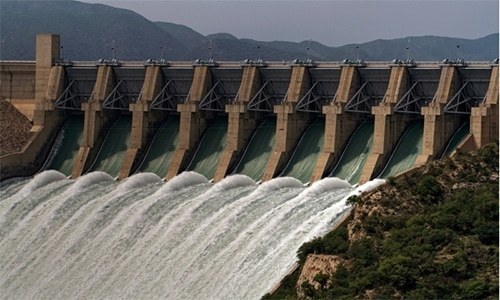
The disagreement between India and Pakistan concerns the design features of the Kishenganga (330 megawatts) and Ratle (850 megawatts) hydroelectric power plants. The former was inaugurated in 2018 while the latter is under construction. The World Bank is not financing either project.
The two countries disagree over whether the technical design features of these two hydroelectric plants contravene the treaty. The plants are located in India on tributaries of the Jhelum and the Chenab rivers, respectively. The treaty designates these two rivers, as well as the Indus, as the “Western Rivers” to which Pakistan has unrestricted use with some exceptions. Under the treaty, India is permitted to construct hydroelectric power facilities on these rivers, subject to constraints specified in annexures to the treaty.
Published in Dawn, April 10th, 2022