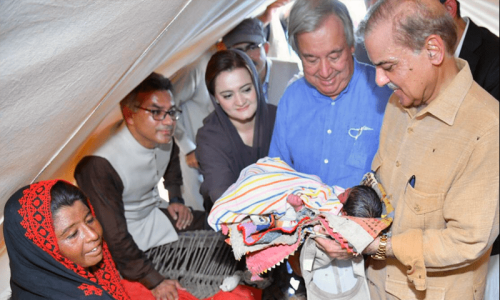
15.6 metric tons of cholera kits arrive as WHO airlifts medical supplies to Pakistan


Two shipments from the United Nations carrying emergency medical supplies and flood relief equipment for victims of the catastrophic floods across Pakistan have arrived at the Jinnah International Airport in Karachi.
“The shipments contain 15.6 metric tons of cholera kits, water and multipurpose tents that can be used as medical tents,” a WHO press release said on Friday.
According to the organisation, the supplies — estimated at a total value of $174,816 — were delivered to Pakistan with the support of the government of Dubai and the International Humanitarian City.
The Dubai government and the International Humanitarian City, it said, have established an air-bridge linking UAE and Pakistan, which is now fully operational with several rotations having already arrived in the country to deliver critical humanitarian supplies in response to the recent flooding.
“The floods have severely impacted the lives of millions in Pakistan. We are currently working with the national authorities to ensure access to health care and medical supplies, mitigate the risk of disease outbreak, coordinate the response to ensure critical gaps are met, and prepare for any worsening of the situation over the coming weeks,” Dr Palitha Mahipala, WHO Representative in Pakistan, said.
“ […] This critical shipment is arriving at an opportune time and will be immensely useful in helping to strengthen essential health services and control the spread of disease, especially in displaced persons’ camps lacking safe water and sanitary conditions,“ he added.
The WHO noted that the scale of the humanitarian crisis in the flood-hit areas of Pakistan was unprecedented, with more than 33 million people affected, over a million houses damaged or destroyed, over 600,000 persons internally displaced in camps and over 1,460 health facilities damaged.
The health threats were enormous, leaving the most vulnerable, including women and children, at increased risk of diseases such as diarrhoea, cholera, malaria, dengue fever, acute respiratory infections and typhoid — already reported in flood-affected areas, it said.
“In close coordination with the ministry of national health services regulations and coordination and national institute of health and partners, WHO is playing a leading role in the health response, providing guidance and health interventions on all fronts, focusing on the current health impact of the floods, while scaling up preparedness for the additional health risks expected to emerge,” WHO added.