Chief Justice of Pakistan (CJP) Umar Ata Bandial on Tuesday remarked that Article 62(1)(f) of the Constitution, which sets the precondition for a member of parliament to be “sadiq and ameen” — honest and righteous — was a “draconian law”.
The CJP made the remarks as the Supreme Court heard PTI leader Faisal Vawda’s appeal against his disqualification for life, under the article.
According to Article 62(1)(f) of the Constitution, a person shall not be qualified to be elected or chosen as a member of Majlis-e-Shoora (Parliament) “unless — he is sagacious, righteous, non-profligate, honest and ameen, there being no declaration to the contrary by a court of law”.
Read: Disqualification under Article 62 (1)(f) is for life, SC rules in historic verdict
In February, the Election Commission of Pakistan (ECP) disqualified Vawda for concealing his US citizenship and directed him to return the salary and other benefits he had received as a minister and as a member of the National Assembly, within two months. It had also de-notified him as a senator.
During today’s hearing, the CJP remarked that the apex court would carefully listen to the case at hand.
“The election commission has the right to investigate a false affidavit,” he went on to say. “Even if we set aside the ECP’s verdict, the facts will remain the same,” he added, adding that the commission had correctly reviewed the facts in Vawda’s case.
“The question is whether or not the ECP can order disqualification for life,” Justice Bandial said.
The hearing was later adjourned till October 6 (Thursday).
In his petition, Vawda has sought to set aside a declaration by the ECP on Feb 9 which led to his disqualification as a lawmaker for life.
Vawda pleaded that the ECP had cited no reason for invoking Article 62(1f) of the Constitution to disqualify him for life. The commission appears to be under an impression that any person disqualified under Article 63(1c) — for having dual nationality — could automatically be penalised under Article 62(1f), he said.
In order to incur a penalty under Article 62(1f), there must be mens rea (criminal intent) as well as evidence before a court of law, the petitioner said, but “both are missing in the ECP’s pronouncement”.
The ECP had disqualified Vawda for life by invoking Article 62(1f), even though the Supreme court had held in Allah Dino Bhayo case last year that the commission was not a court of law, he said.
It is pertinent to mention that in 2018, the apex court had ruled that disqualification handed down under Article 62 (1)(f) was for life.
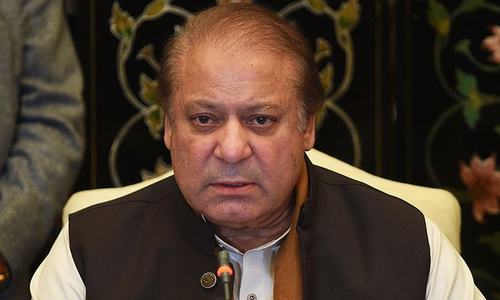
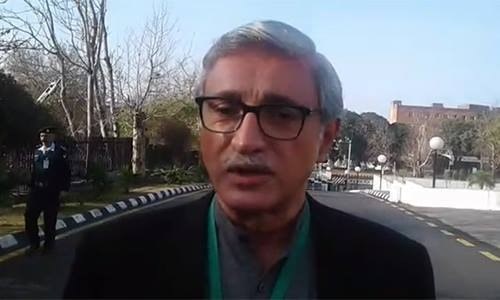
Article 62(1)(f) was the same provision under which former prime minister Nawaz Sharif was disqualified by a five-judge SC bench on July 28, 2017, in the Panama Papers case. Likewise, former PTI leader Jahangir Tareen was disqualified in 2017 by a separate bench of the apex court under the same provision.