Iran presents its first hypersonic ballistic missile: state media


Iran presented what officials described as its first domestically-made hypersonic ballistic missile on Tuesday, the official IRNA news agency reported, an announcement likely to heighten Western concerns about Tehran’s missile capabilities.
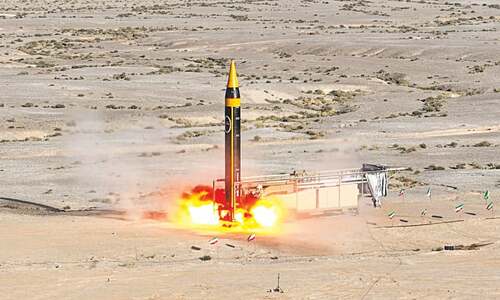
Iranian state media published pictures of the missile named Fattah at a ceremony attended by President Ebrahim Rahisi and commanders of Iran’s elite Revolutionary Guards Corps.
“The precision-guided Fattah hypersonic missile has a range of 1,400 kilometres and it is capable of penetrating all defence shields,” Amirali Hajizadeh, the head of the Guards’ aerospace force, was quoted as saying by Iranian state media.
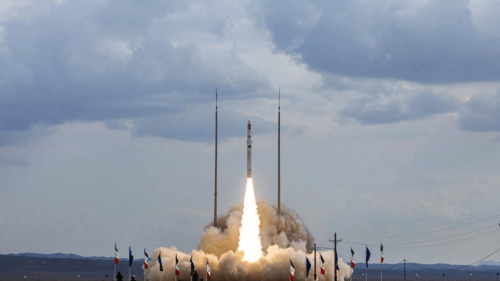
Hypersonic missiles can fly at least five times faster than the speed of sound and on a complex trajectory, which makes them difficult to intercept. Last year, the Islamic Republic said it had built a hypersonic ballistic missile which can manoeuvre in and out of the atmosphere.
State TV said Iran’s Fattah missile can target “the enemy’s advanced anti-missile systems and is a big generational leap in the field of missiles”.
“It can bypass the most advanced anti-ballistic missile systems of the United States and the Zionist regime, including Israel’s Iron Dome,” Iran’s state TV said.
Fattah’s top speed reached mach 14 levels (15,000km/h), it added.
Despite US and European opposition, the Islamic Republic has said it will further develop its defensive missile programme. However, Western military analysts say Iran sometimes exaggerates its missile capabilities.
Concerns about Iran’s ballistic missiles contributed to then-US president Donald Trump’s decision in 2018 to ditch Tehran’s 2015 nuclear pact with six major powers.
Trump reimposed US sanctions on Iran after exiting the nuclear pact, leading Tehran to resume previously banned nuclear work and reviving US, European and Israeli fears that Iran may seek an atomic bomb. Iran has consistently denied any such ambition.
Indirect talks between Tehran and US President Joe Biden’s administration to salvage the nuclear deal have stalled since last September.
Israel, which the Islamic Republic refuses to recognise, opposes efforts by world powers to revive Tehran’s nuclear deal and has long threatened military action if diplomacy fails.