How is climate change impacting GB’s ecosystem?
Pakistan is ranked among the top ten countries most affected by climate change in the last two decades. In the last 50 years, the annual mean temperature has increased by roughly 0.5 degrees Celsius, and it is expected to rise by 3°C to 5°C by the end of this century.
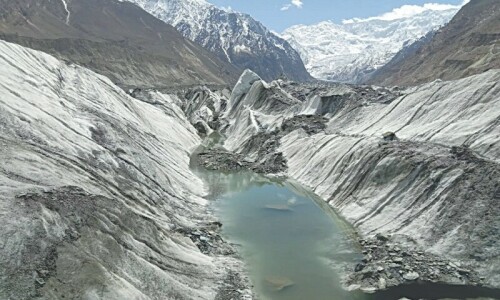
It is estimated that there are around 7,000 glaciers in Pakistan, most of which are located in GB. Some of the largest glaciers, including the Siachen, Baltoro, Biafo and Shisper glaciers in GB, are retreating at a rapid rate due to rising temperatures, causing GLOFs.
Climate change is negatively affecting GB’s ecosystem as shifts in sowing and harvesting seasons are being witnessed. Due to unpredictable rainfall, rising temperatures and insect attacks, crop productivity and forage availability have decreased.
The biodiversity loss has resulted in shrinking habitats for species, pushing them on the brink of extinction — for example, snow leopards.
As world leaders gather in the UAE in the run-up to the COP28 summit, Dawn is speaking to experts to answer some pressing, everyday questions that are on people’s minds about climate change and related issues.
How does GLOF pose a threat to GB?
The frequency and likelihood of GLOFs have increased in the last decade. The whole region has been identified as either at a high or very high risk with respect to the GLOF hazard.
These glaciers are shrinking by approximately one per cent per year, creating more than 3,000 glacial lakes.

The melting of glaciers in GB affects not only locals, but also the population living downstream. These glaciers feed the Indus River. While their rapid melting is increasing the water flow in the short term, in the long term it is likely to cause water shortages as river flows would decrease due to depleting glaciers. This will damage the agriculture sector and threaten food security.
Today, Haider Raza — the regional head of WWF Pakistan — explains the phenomenon of glacial lake outburst floods, GB’s vulnerability to climate disaster, and how nature-based solutions could mitigate climate threats.
How can these impacts be mitigated?
There is a need to implement robust and sustainable climate change adaptation strategies. Climate literacy should be increased among GB residents, and they should be encouraged to adopt sustainable practices and participate in conservation activities.
Promote nature-based solutions in developmental projects to increase the resilience of the local community along with integrated water resources management for sustainable water consumption.
Published in Dawn, November 28th, 2023