The Human Rights Watch (HRW), in a statement on Friday, stated that India should demonstrate that it is genuinely committed to helping those whose lives or freedom are in danger by protecting all asylum seekers.
Earlier this week, India implemented the contentious 2019 Citizenship Amendment Act (CAA), sparking sporadic protests and a war of words between Prime Minister Narendra Modi’s government and opposition groups weeks before national elections are held.
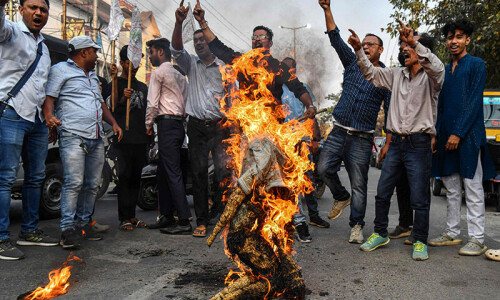
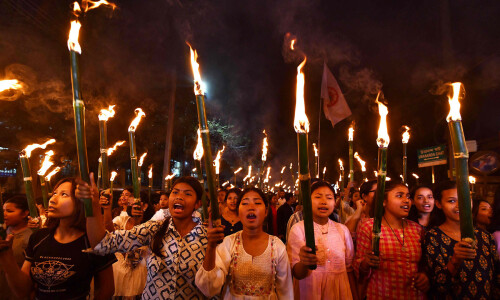
Thousands of people across India protested the law, fearing it could be used to disenfranchise Indian Muslims and strip them of their citizenship rights.
In Chennai, Tamil Nadu’s capital, protesters took out a candlelight march and shouted slogans against the law.
In Assam, protesters burnt copies of the law and shouted slogans on Monday night, and local opposition parties have called for a state-wide strike on Tuesday.
Many oppose the CAA in Assam as it can increase migration from neighbouring Muslim Bangladesh, a longstanding flashpoint that has polarised the state for decades.
The Communist Party of India (Marxist), which rules the southern state of Kerala, had called for state-wide protests on Tuesday.
However, there were no reports of damage or clashes with security forces.
The statement said the authorities deployed many security personnel in Delhi and Assam.
In 2019, the police used excessive force to crush protests against the law and communal clashes, killing 53 people in New Delhi, most of them Muslim.
The act, originally approved by the Indian parliament in 2019, offers a fast track to citizenship for religious minorities from Pakistan, Afghanistan and Bangladesh who arrived in India before December 31, 2014.
Specifically, it applies to Hindus, Parsis, Sikhs, Buddhists, Jains, and Christians, but not Muslims. These individuals are now encouraged to seek citizenship through an online application process.
Pakistan condemned the act, labelling it a discriminatory move by a “Hindu fascist state” aimed at presenting India as a sanctuary for persecuted non-Muslim minorities from neighbouring countries.
According to HRW, the Indian Supreme Court has yet to hear petitions challenging the amendments for religious bias and violating fundamental rights.
It said that the United Nations High Commissioner for Human Rights expressed concern over the law, calling it a “breach of India’s international human rights obligations” and labelling the act as “fundamentally discriminatory”.
It pointed out that India has protected many people fleeing persecution but members of the majority can also face persecution, such as Afghans at risk fleeing the Taliban.
“It should ratify the refugee convention, establish non-discriminatory refugee law and asylum procedures, and establish a path to citizenship for all recognised refugees without regard to their religion,” the statement said.