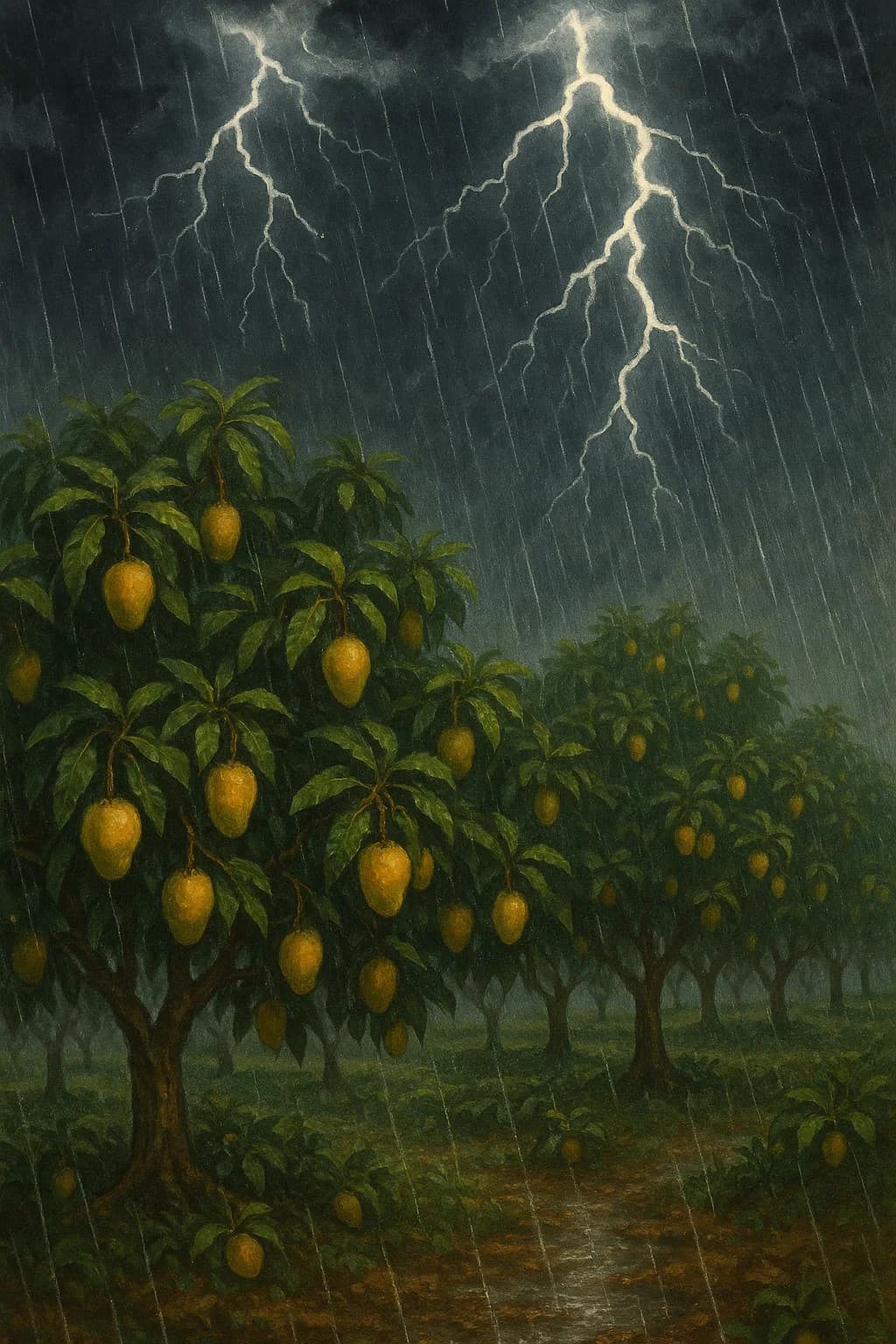
MANGO, the king of fruits, is a source of delight in the summer season, and contributes significantly to Pakistan’s economy through local sales and inter-national exports. Some districts of Sindh, especially Tandojam, Tando Allahyar and Mirpurkhas, are known for producing early-season mangoes of high quality.
Each year, these mangoes are exported globally and help generate income for thousands of farming families and agricultural workers. However, the current season has brought severe challenges for the growers in Sindh.
The combined impact of climate change, water shortage, and, more specifically, a recent thunderstorm resulted in a serious damage to mango orchards across the region. This crisis not only threatens mango production, but also endangers the livelihoods of those dependent on the mango industry.
The climate change phenomenon is now affecting mango production more visibly than ever. Traditionally, mango trees follow a seasonal rhythm of flowering, fruit-setting and ripening. However, in recent years, rising temperatures, irregular weather patterns, and untimely rainfall have disturbed this cycle.
High daytime temperatures and cooler nights are ideal for mango flowering, but this year, fluctuating weather caused poor flowering and low fruit-setting in the orchards. This means fewer mangoes were formed on the trees, directly affecting the overall yield.
In addition to weather-related problems, farmers are facing a serious shortage of irrigation water. The main source for mango orchards in Sindh is water from the canals which is not being supplied on time, or in the required quantities.
Many tubewells have dried up due to falling groundwater levels, and those still working are too expensive to run for most small farmers. Without regular watering, mango trees become weak and fail to support proper fruit development. This has caused widespread fruit dropping and a significant decline in fruit quality.
A powerful thunderstorm last month caused further devastation in the mango-
growing areas. Strong winds, heavy rain and lightning damaged the orchards. Initial surveys suggest that 30-50 per cent of the fruit has been lost in most of the orchards. The storm hit right during the crucial fruit-maturity stage, making the damage even more serious.
Mango growers, who had invested time, money and hope into their orchards, are now facing major financial losses. Many had taken loans for fertilisers, labour and transport, expecting to recover the costs through harvests. With such heavy losses, recovery will be difficult.
Moreover, the shortage of mangoes may raise prices in the local markets and reduce export quantities, impacting the national economy.
To tackle these challenges, both short-term relief and long-term planning are required. Experts recommend taking several steps, such as encouraging farmers to adopt climate-resilient mango varieties, promoting water-saving irrigation methods, providing timely weather alerts and training to farmers on climate-smart practices, and planting windbreaks to reduce the impact of storms on orchards.
Sindh’s mangoes are not just a fruit; they are part of our culture, economy and identity. It is time we protected this valuable resource with modern farming techniques, better planning and strong policy support. By working together, we can save the mango industry and ensure its survival for our future generations.
Saddam Hussain
Hyderabad
Published in Dawn, June 21st, 2025