Food imports jump to $3 billion

ISLAMABAD: Pakistan’s food import bill soared to $3.075 billion in the first four months of the current fiscal year, marking a sharp 31.38 per cent increase from $2.340bn in the same period last year.
The surge highlights growing reliance on imported food commodities amid domestic production and supply challenges. The increase was primarily driven by higher imports of sugar, edible oil, and tea to meet domestic demand.
According to data released by the Pakistan Bureau of Statistics, palm oil constituted the largest share among imported food items, followed by pulses, tea, soya bean oil and sugar.
Pakistan imported 231,390 metric tonnes of sugar during the first four months of the current fiscal year (4MFY26), marking an unprecedented year-on-year increase of 15,748.63pc compared to just 1,460 metric tonnes in the same period last year.
In terms of value, sugar imports rose to $131.311 million, up from $1.454 million in 4MFY25 — a jump of 8,930pc, according to official data.
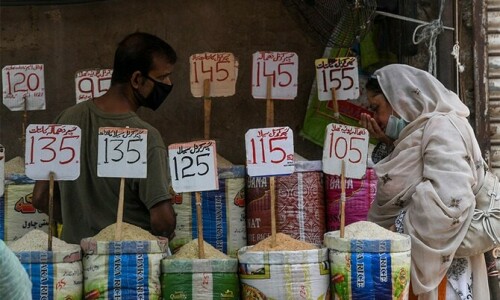
The dramatic rise comes in response to the government’s decision to allow sugar imports in a bid to address domestic shortages and stabilise market prices. Retail sugar prices have been fluctuating between Rs190 and Rs230 per kg in various cities, prompting authorities to step in and ease supply constraints through imports.
As part of a trade agreement with the United States, Pakistan’s import of soyabean oil rose significantly in the first four months of FY26. During July–October (4MFY26), soyabean oil imports value reached $66.108 million, up 12.99pc from $58.509 million recorded in the same period last year.
The surge highlights Pakistan’s decision in agreement with the USA to increase reliance on soyabean oil for edible oil needs and the deepening trade engagement with the United States in the agricultural sector.
The value of palm oil imports surged to $1.325bn during July-October FY26, up from $1.024 billion a year ago, reflecting a growth of 29.37 per cent. Despite rising consumption, Pakistan imported pulses worth $255.461m during July-October, compared to $297.800m in the same period last year, a decline of 14.22pc.
The import bill for all other food items rose 53.40pc to $904.584m in the 4MFY26 from $589.681m a year ago. Tea imports decreased by 1.29pc during the reviewed months, to $208.745m from $211.483m.
Published in Dawn, November 23rd, 2025