Top WTO official sounds fertiliser warning over Middle East war

Published
0

Disruptions to fertiliser supplies caused by the Middle East war pose a double threat to global food security through scarcity and high prices, a top World Trade Organization official has warned, reports AFP.

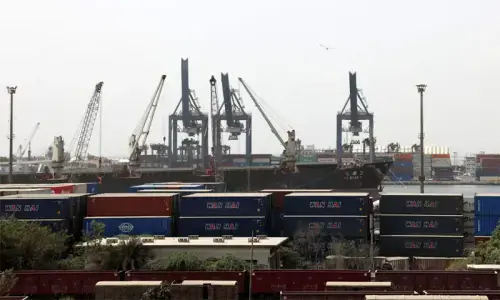
Iran has virtually shut the Strait of Hormuz, choking a vital transit route for oil and gas — as well as fertilisers.

A third of the world’s fertilisers normally transit the strait, and the disruption has prompted multiple warnings about the impact on food production.

“Fertilisers are the number one issue of concern today. If there is no more fertiliser, there is an impact on quantities but also on prices,” WTO Deputy Director-General Jean-Marie Paugam told AFP in an interview in Yaounde.

“The effect compounds the following year: harvests shrink and prices rise.”

Major food exporters such as India, Thailand and Brazil depend on the Gulf for urea, a nitrogen-based fertiliser, making them vulnerable.


Opinion

Editorial

Talks, at last
Updated 03 Oct, 2026

Talks, at last

The government’s constant threats to suspend KP’s elected dispensation over a political protest have escalated hostilities considerably. In that context, both sides did well to start talking.
IWT’s future
03 Oct, 2026

IWT’s future

TOGETHER with the Kashmir dispute, India’s unilateral suspension of the Indus Waters Treaty has become the biggest...
Pained minds
03 Oct, 2026

Pained minds

IN Pakistan, mental healthcare is wedged between two extremes — a luxury or a stigma. Estimates cited by the...
Risks ahead
Updated 02 Oct, 2026

Risks ahead

To think that the government would rather push out an elected government than grant a single prisoner some facilities does not square up rationally.
Exit from Iraq
02 Oct, 2026

Exit from Iraq

AMERICAN and British troops have once again shipped out of Iraq. On Wednesday, the foreign forces left the Arab...
Lahore’s ozone warning
02 Oct, 2026

Lahore’s ozone warning

LAHORE has received another warning that its air pollution crisis cannot be treated as a problem that begins with...