Behind the manicured greenbelts and modernist architecture of Pakistan’s capital lies a starkly different reality -- one composed of mud-brick walls, open sewers, and a deep-seated fear of the state.
Islamabad’s kutchi abadis (informal settlements) are no longer just a failure of urban planning; they have become the final sanctuary for thousands fleeing a rising tide of religious extremism in the heart of Punjab.
For decades, the migration of the Christian community from districts such as Sialkot, Gujranwala, and Sargodha has been driven by a struggle for survival rather than mere economic necessity.
A majority of the residents in the settlements like Sector H-9, Rimsha Colony, and Shaper Colony are families who fled blasphemy allegations and forced conversions in rural areas. For them, Islamabad represents a “haven” where communal strength offers a fragile shield against the mob.
The leadership of the Human Rights Commission of Pakistan (HRCP) has taken a firm stance against the state’s current policies.
During a recent session, HRCP Secretary General Harris Khalique emphasised that these settlements were a “human rights crisis”, rather than a simple housing issue. He remarked that if these 500,000 workers were to leave the city, the capital would grind to a halt, as they were the people who provided essential services such as sanitation and gardening.
Mr Khalique condemned the authorities’ alleged double standards, where the poor are evicted as “encroachers” while the illegal constructions of the elite are regularised.
According to HRCP Co-Chair Munizae Jahangir, when the state fails to provide a roof and then forcibly evicts citizens from their homes, it is a flagrant violation of Article 9 (Right to Life) of the Constitution. She argues that the state must immediately pivot from “eviction” to a policy of “resettlement.”
The role of some of the media organisations in this regard is very positive and encouraging, consistent coverage of the plight of Islamabad’s slum dwellers has brought this human tragedy to national and international attention.
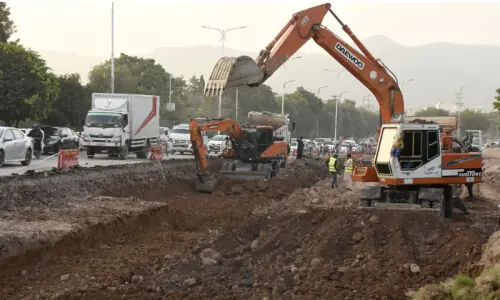
However, the tragedy for these marginalised groups is compounded by the Capital Development Authority’s (CDA) approach. Disregarding legal protocols, the CDA officials reportedly frequently issue mere ‘three-day’ verbal warnings to the residents. While the Urban Regeneration Regulations approved in February 2026 theoretically allow for in-situ upgrading — building flats on-site and providing 99-year leases — practical progress remains frustratingly slow.
Islamabad stands at a crossroads. It can continue to be a city of walls and exclusions, or it can honour its constitutional obligations to its most persecuted citizens. The message from the rights activists, such as Harris Khalique and Munizae Jahangir, is clear: ensuring complete resettlement before any operation is a constitutional obligation. A city that cannot provide a roof to those fleeing violence is a city that has lost its soul.
The protection of these kutchi abadis is not just a matter of urban planning; it is a matter of national conscience.
— The writer is a human rights activist.
Published in Dawn, March 29th, 2026