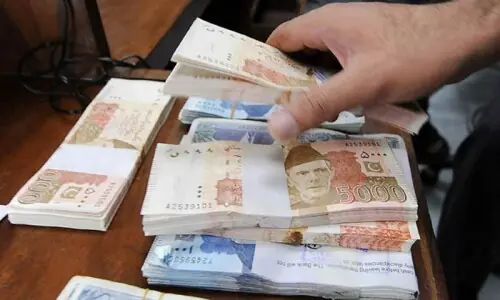
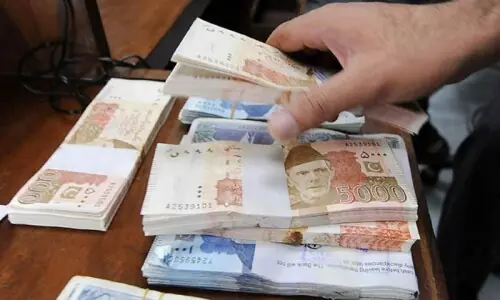
KARACHI: The government raised Rs518 billion through auction and non-competitive bids for treasury bills on Wednesday, with the highest cut-off yield reaching approximately 12 per cent.
The State Bank of Pakistan (SBP) reported that investors, mainly commercial banks, submitted bids totalling Rs2.192 trillion, but the government raised only Rs237.6 billion through the auction.
However, for the first time, the government raised a higher amount of Rs280.3bn from non-competitive bids than from auction. This may be due to provincial governments’ bids, which reached as high as Rs200bn for three-month papers.
Collectively, the government raised Rs518bn through auction and non-competitive bids, with the highest amount raised for three-month T-bills — Rs118.7bn through auction and Rs230.8bn through non-competitive bids.
The bids of Rs2.19tr reflect the banks’ willingness to park their maximum liquidity into risk-free government papers, as lending to the private sector is considered too risky in the current economic scenario.
Investment options for the private sector are limited because they borrow from banks for working capital and short-term borrowing.
Banks and the corporate sector could hardly invest 11pc of their bids, leaving enough liquidity, but the private sector finds the interest rate too high for long-term borrowing.
The government offered 11.99pc for 12-month papers and accepted Rs52.6bn, while the lowest rate of return was 11.46pc, with Rs38bn raised for one month.
The SBP reiterated in its monetary policy statement that stabilisation takes precedence over economic growth. Policymakers prefer to keep interest rates high to control inflation, which could otherwise distort their policies.
Incidentally, low economic growth over the past three years has increased poverty and unemployment, forcing hundreds of thousands of young, skilled and unskilled Pakistanis to leave the country in search of jobs abroad. However, the government appears satisfied with this situation, as it believes this would yield higher remittance inflows, for which it has set a target of $44bn for FY27.
Published in Dawn, August 20th, 2026