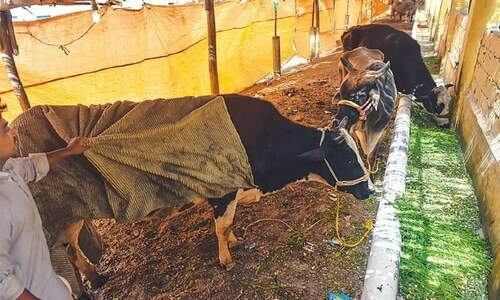
TAXILA: Anxiety has gripped cattle farmers and dairy owners in several rural areas of Jand tehsil following reports of lumpy skin disease (LSD) among cows, calves and buffaloes, with livestock owners fearing that the disease could spread further unless effective preventive measures are taken.
Cases have reportedly surfaced in Pind Suktani, Aurangabad, Injra, Khattakabad, Kani, Mathail, Kotwali, Thatta and Chabb, where farmers claim the number of affected animals has been steadily increasing.
Livestock owners alleged that despite the growing number of suspected cases, they were being forced to purchase costly vaccines from private veterinary medicine stores as government-supplied doses were not readily available. They also complained of inadequate disease surveillance, field monitoring, vaccination and public awareness measures by the Livestock Department.
The farmers urged the authorities to launch an immediate district-wide assessment to determine the actual extent of the disease and ensure timely vaccination and treatment of affected animals.
Farmer Ahmed Khan said the viral disease appeared to be spreading through tick and mosquito bites, particularly amid stagnant water and unhygienic conditions. He said many farmers, unable to afford private treatment, were resorting to traditional remedies.
He claimed that a vaccine dose was being sold for around Rs11,000 at local veterinary stores, making it prohibitively expensive for small-scale livestock owners.
Another farmer, Haji Irshad, stressed the need for urgent intervention to contain the disease and protect farmers from potentially heavy economic losses.
Stakeholders called for intensified field surveillance, accurate reporting of suspected cases, wider availability of vaccines and treatment facilities, and an effective awareness campaign for livestock owners.
According to Barani Livestock Production Research Institute (BLPRI) Research Officer Asad Abbas Khan, LSD causes painful nodules and swellings on the skin of cattle and may be accompanied by fever, loss of appetite and weakness.
The disease can also cause a significant decline in milk production and adversely affect the health and productivity of infected animals.
However, Deputy Director Livestock Development Dr Yasir Mustafa Butt rejected reports of an outbreak in Jand, describing the situation as involving only “isolated cases”.
Talking to Dawn, he said the department’s Disease Investigation Department had identified the affected locations and was informing local residents through its mobile application and field vaccinators.
Published in Dawn, August 25th, 2026