Game Review: Black Flag Resynced proves that the old ways are among the best
TL;DR:
Pros:
-
Highly upgraded visuals which bring the Caribbean to life again
-
Combat and free-running mechanics have been completely revamped
-
Naval combat unchanged, but with new weapons
-
A compelling story returns with endearing protagonist Edward Kenway
-
Stealth missions no longer result in an instant failure if detected
-
Modern-day sections have been completely removed
Cons:
-
Some combat features like disarms have been removed
-
Early-game naval battles can be somewhat punishing
-
Lack of a mini-map hampers navigation when sailing and free-running
-
The new quests are hit or miss, and mostly miss
Score: 5.5/7 — A streamlined and improved experience, but at a cost
Reviewed on PlayStation 5; available on PlayStation 5, Xbox Series X/S, PC (Windows)
Price: Rs12,500 (physical copy); $69.99 (PlayStation Store); $59.99 (Steam)
When Assassin’s Creed IV: Black Flag hit shelves in 2013, it seared itself into gamers’ hearts with its compelling protagonist, Edward Kenway, its Caribbean setting, and a naval combat system that fully delivered the fantasy of an 18th-century sailor.
It broke the mould so aggressively, in fact, that developers Ubisoft could not recreate the formula in other pirate games like Skull and Bones.
Black Flag: Resynced is not really a remaster as much as it is a reimagining of the 2013 classic. The setting, story and characters are the same, but with quality-of-life improvements and a completely revamped combat and parkour system to bring it into the present generation. It’s like playing two entirely different games.
For this review, I’m playing both the original and Resynced version in parallel to see what’s changed, while also judging the latter on its own merits as a game released in 2026.
Same same, but different
In the original game, players were thrust into the “golden age of piracy” in the 1700s, with the Caribbean setting offering a mix of vibrant greenery, dense vegetation and crystal-clear blue water, all under a beaming yellow sun.
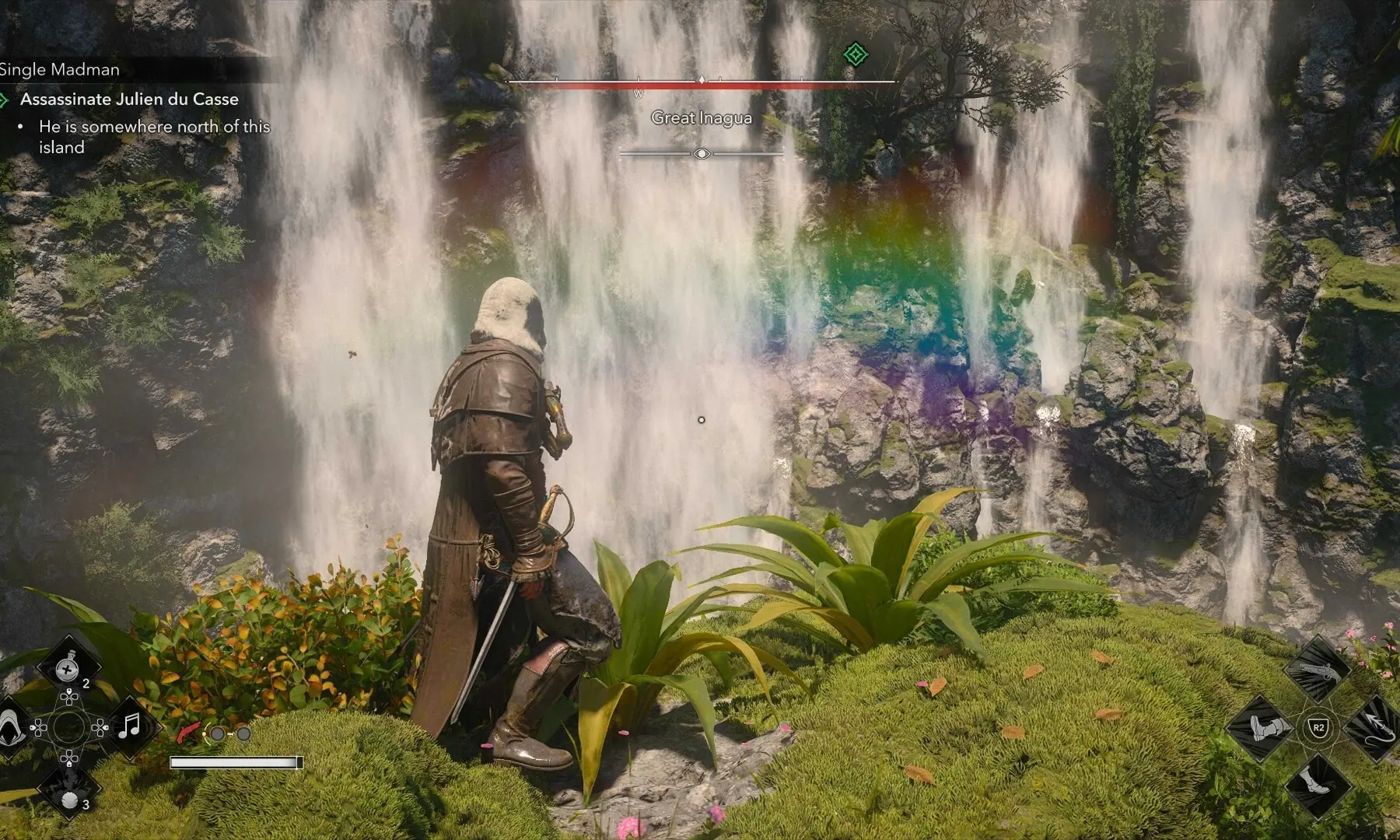
I haven’t played the original in years, so booting it up again unlocked a core memory. I’ll never forget how colourful the Caribbean in Black Flag is, and the environment (largely) holds up even to this day.


Resynced brings back the setting but with a far more striking level of detail — vegetation looks far more dense, textures like stone, wood and fabric are more intricate, and excellent lighting brings it all together. It’s absolutely beautiful.
The story is still the same, following a prideful and arrogant pirate trying to find his fortune. It’s a good Assassin’s Creed story, and Edward’s wit and charisma make him one of my favourite protagonists, with Matt Ryan reprising his role and, once again, killing it.
There are also new lines of dialogue — Edward and another character, Stede Bonnet, have conversations that I didn’t hear while playing the prologue in the original, for example.
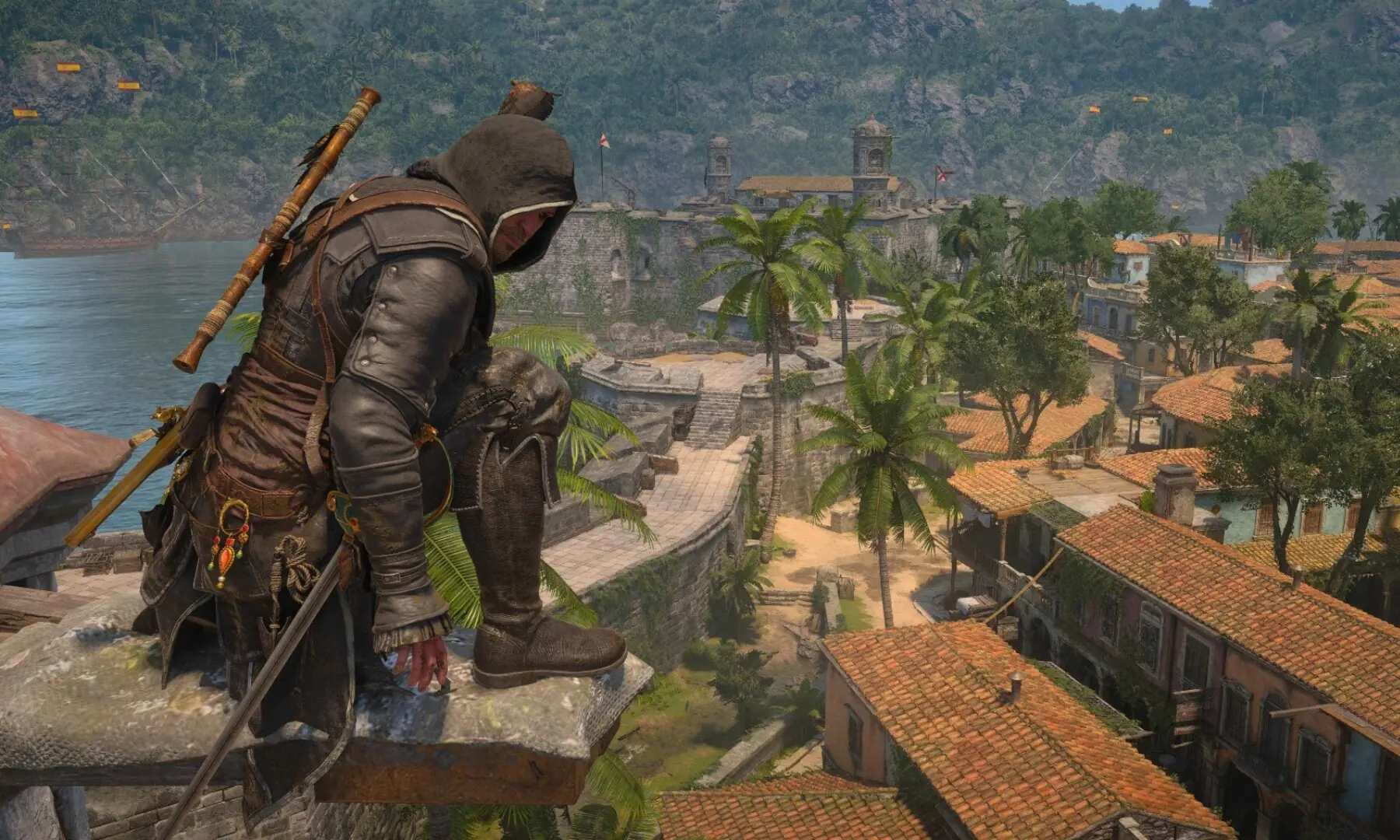
Resynced has brought a dramatic improvement in presentation, as it should for a remaster or remake. It looks like what I remember the original looking like when I played it a decade ago. But the true change doesn’t lie in how good the world looks, but in how you interact with it.
Brave new world?
The greatest change between this and the original is a complete overhaul of the game’s mechanics and user interface (UI), as well as the addition of new content.
Entire sections of the original have been stripped out in the name of streamlining the experience; stealth missions and tailing missions no longer trigger a failure state if detected, which addresses one of my biggest complaints with the original.
Meanwhile, Resynced also introduces entirely new elements, like Edwards’ cadre of officers. These are crew members you can recruit who offer extremely useful weapons and abilities for his ship, the Jackdaw, such as an upgraded mortar launcher and a brace that, if timed correctly, allows you to tank entire salvos of fire from enemy ships.
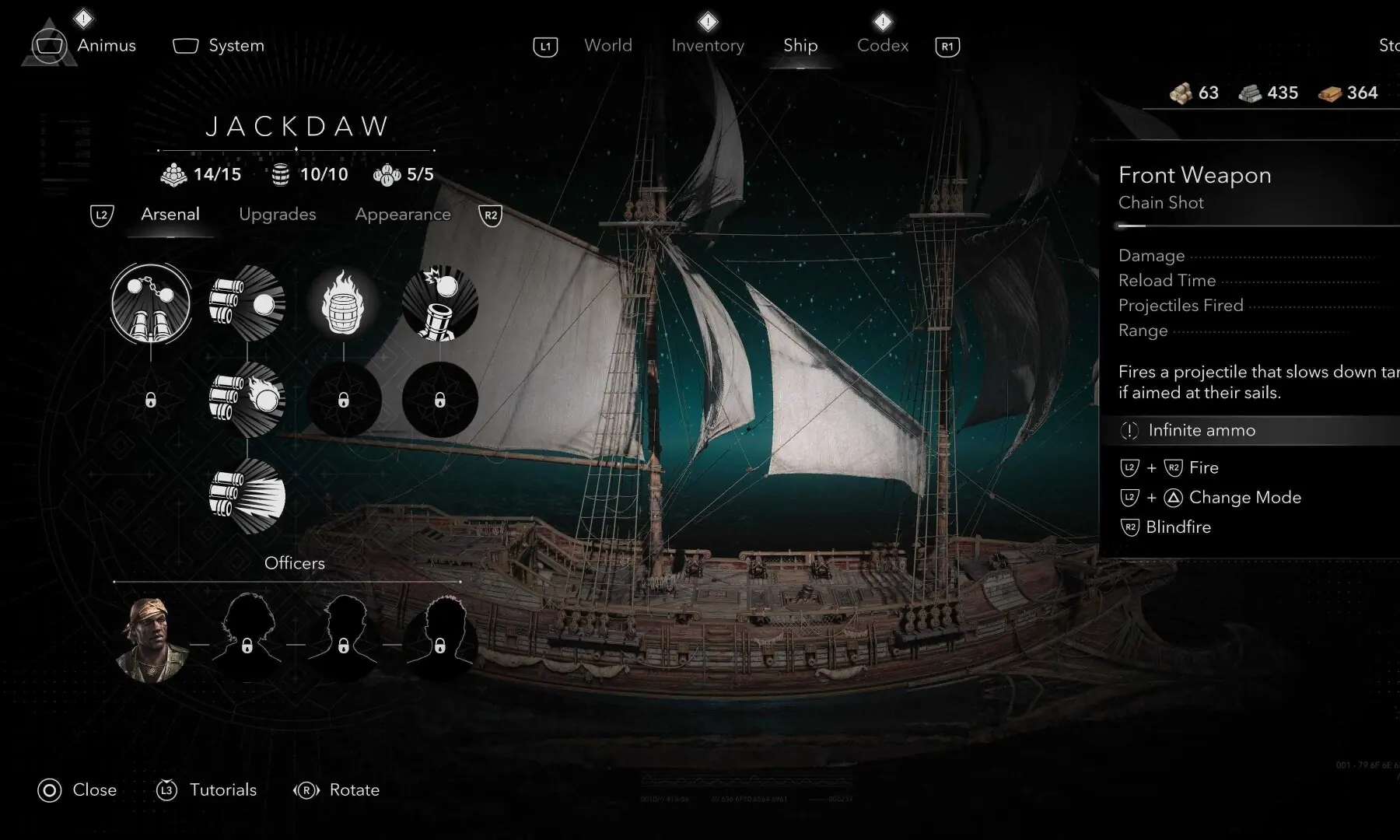
But it’s not perfect. The officers are worth pursuing for their bonuses, but the quests to recruit them are one of the low points of the game in terms of fun and writing. All three officer quests revolve around someone wronging them, then you helping them get their revenge. They’re one-note and annoying, like the officers themselves.
Also, Resynced’s UI has been brought more in line with 2023’s Assassin’s Creed Mirage, with similar menus outlining your inventory, the same cluttered Ubisoft map and something called the Dark Animus? (more on this later).
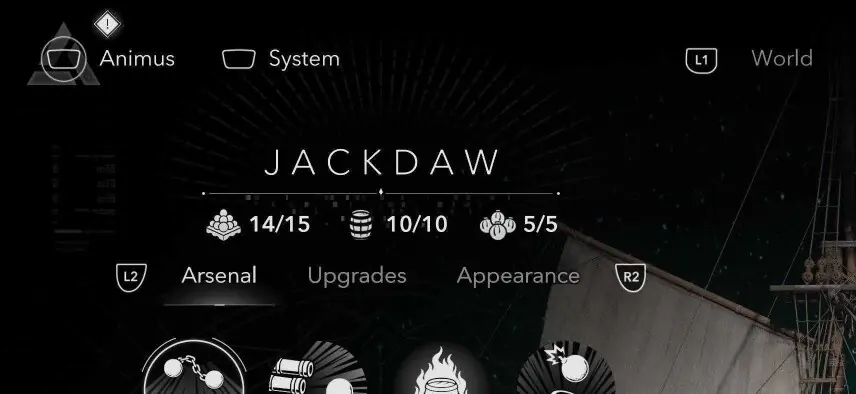
Some menus which have been reworked are clunky to use, and why do I have to hit the touchpad twice to go to the pause menu?
Annoyingly, there’s no mini-map in your heads-up display like in the original. If you get into a chase and need to find a hiding spot, or want to find hidden collectables nearby, you have to manually open the game’s map, which kills your momentum.
There is no mini-map while sailing either.
Get the cutlasses
But the biggest change by far — and the best in my opinion — is the complete overhaul of Black Flag’s combat and free-running system. Playing both the original and Resynced in parallel truly feels like playing two different games.
The combat is something I still don’t like about the original. When fighting a group of, say, four enemies, if you kill one — which is very easy if you counter and then hit the attack button — you enter a kill streak, whereby the other three guys in that group will go down with just one button press. It trivialised combat, though the takedown animations were very stylish.
In Resynced, the combat is more in line with the aforementioned Mirage — there’s a greater emphasis on parrying and dodging enemy attacks. You also have special moves like a kick and a sweep to help break enemies’ defence and take them down. Landing strikes, followed by a sweep to break their block and a finisher, is a truly satisfying experience.

However, the original Black Flag allowed the player to use the hidden blades in combat and even disarm enemies, which is not present here. You could pick up an enemy sword or musket to provide more flexibility and visual flair to combat; a real shame, it’d be nice to have that choice with the upgraded visuals.


In terms of free-running, it’s been greatly improved from the original and feels much more precise in terms of finer movements. You still run across a mix of trees and buildings, with Havana remaining the game’s parkour playground with its dense sprawl of buildings, but it feels smoother to me.
If it ain’t broke, don’t fix it
Black Flag’s naval combat — which made it so beloved to begin with — is largely the same system as the original. The Jackdaw is armed with forward cannons, broadside guns and fire barrels you can drop from the rear like before, but new additions like flaming cannonballs help keep the game fresh.
Boarding enemy vessels is still really fun and, like everything else, streamlined to make the experience more enjoyable.

Assassinating enemy officers or cutting down their flag is no longer an objective you’re forced to complete, but it contributes to lowering the enemy crew’s morale, allowing you to get creative with how you board.
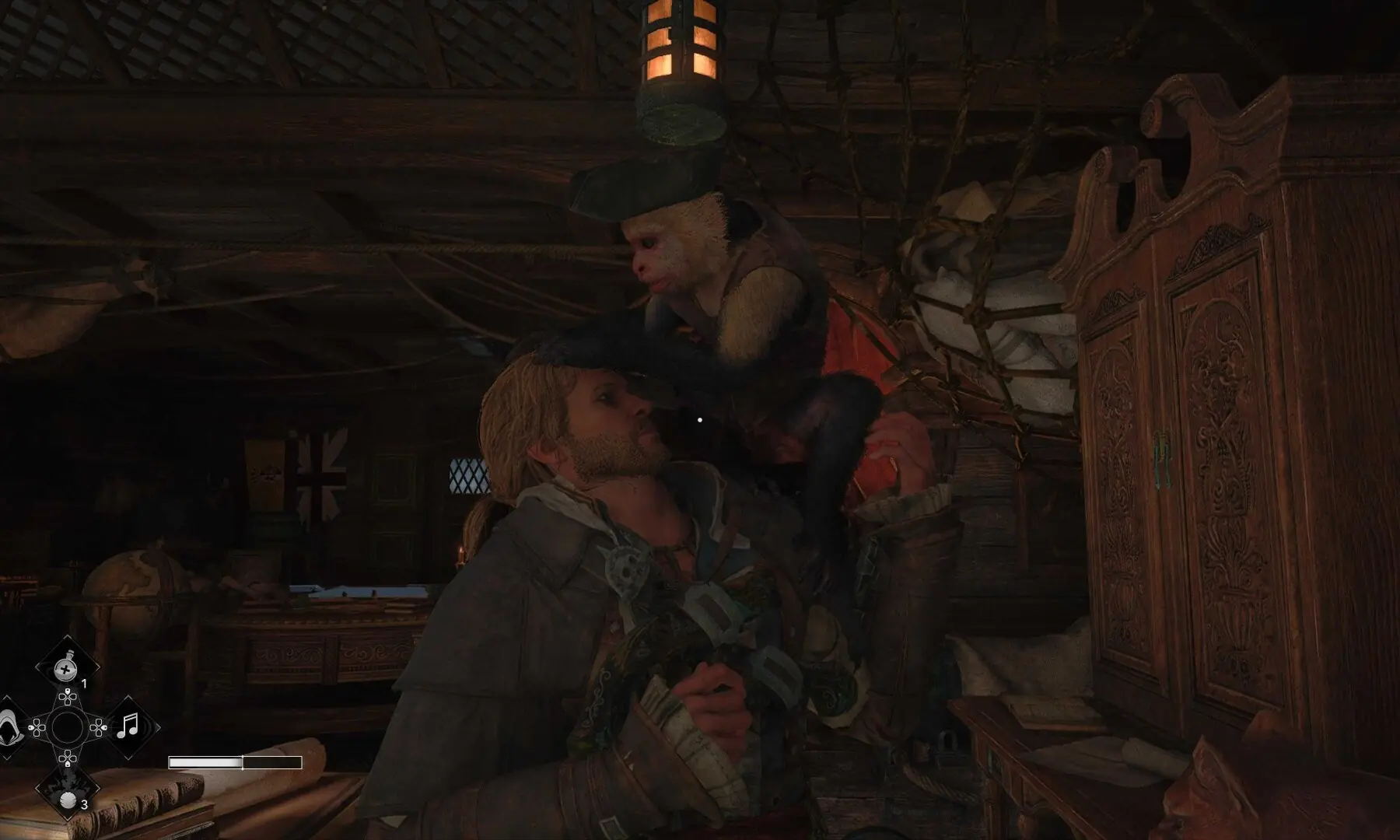
Sailing still feels as fun as ever, with the control scheme being largely the same as the original, and there are some new additions like additional weapons such as the multi-shot mortar and flaming broadside cannons, being able to choose which sea shanties the crew sings (I LOVE THIS), and a pet who will sit and hang out on the quarterdeck — I found a cat and a monkey in a little pirate costume.

Early-game naval encounters, however, can be unforgiving unless you upgrade the Jackdaw throughout your experience.
You need to keep doing this to keep pace with the increasing difficulty of each of the map’s regions.
Stuck in the past
Another brilliant thing Resynced has done is to remove the frankly boring modern-day sections in the original Black Flag.
In Assassin’s Creed, playing in the game’s historical period is, in reality, the player reliving the memories of their ancestors through present-day technology.
After reaching a certain point, the game would pull you out of the 18th century and dump you in an office in present-day Montreal. This ABSOLUTELY killed pacing and any semblance of momentum, bringing your buccaneering to a halt for some tedious first-person exploration in an office. Thankfully, it’s stuck in the past, but what it’s been replaced with is somewhat hit or miss.
I already mentioned officer quests, but the quest ‘A World Without Gold’ really stood out to me for the wrong reasons.
Without spoiling anything, it’s a very heavy-handed recycling of the themes from the main story, namely the consequences of how greed can endanger those around you. Also, Edward falls for the villain’s same trick three times; it’s as if his IQ suddenly hit room temperature for this one quest, before rising back to normal for the rest of the campaign.

While we’re talking about bad quests, what even were the Dark Animus quests anyway? I played a couple of them and found linear and restrictive platforming and a narrative completely divorced from the main story. They’re pointless and, more egregiously, extremely boring.
Smooth sailing?
When this was announced, I was expecting Ubisoft to put out more “Ubi-slop”, but I was genuinely surprised how true this is to the original. The bits that worked have been kept largely the same but with minor improvements, while major overhauls generally work really well, except for the updated UI.
The story and naval combat are virtually the same and never needed major changes; those were high points of the original and what made it such a fan-favourite.
Additions like the perfect brace mechanic and new weapons build on an already solid and proven naval warfare system, but the new quests are mostly rubbish and not as well written as those from 2013.
If you’ve never played Black Flag before, I can see a case for buying this. You’ll be able to jump into the Caribbean without the boring modern-day sections of the original. But if you have played the original, then you’ll enjoy modernised controls and far higher visual quality, without sacrificing the series’ identity. That said, I recommend you wait for a sale or for the disc to get cheaper.
Mikail Ahmed Shaikh is a senior sub-editor on Dawn’s online news desk with four years of experience in the field. His reporting focuses on defence, security, and terrorism, and he also reviews video games for the publication. He can be found on X at @MikailAhmedShaikh.