One more Fatima Sana, and Pakistan would have gold
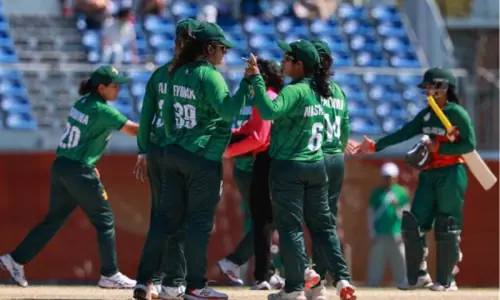
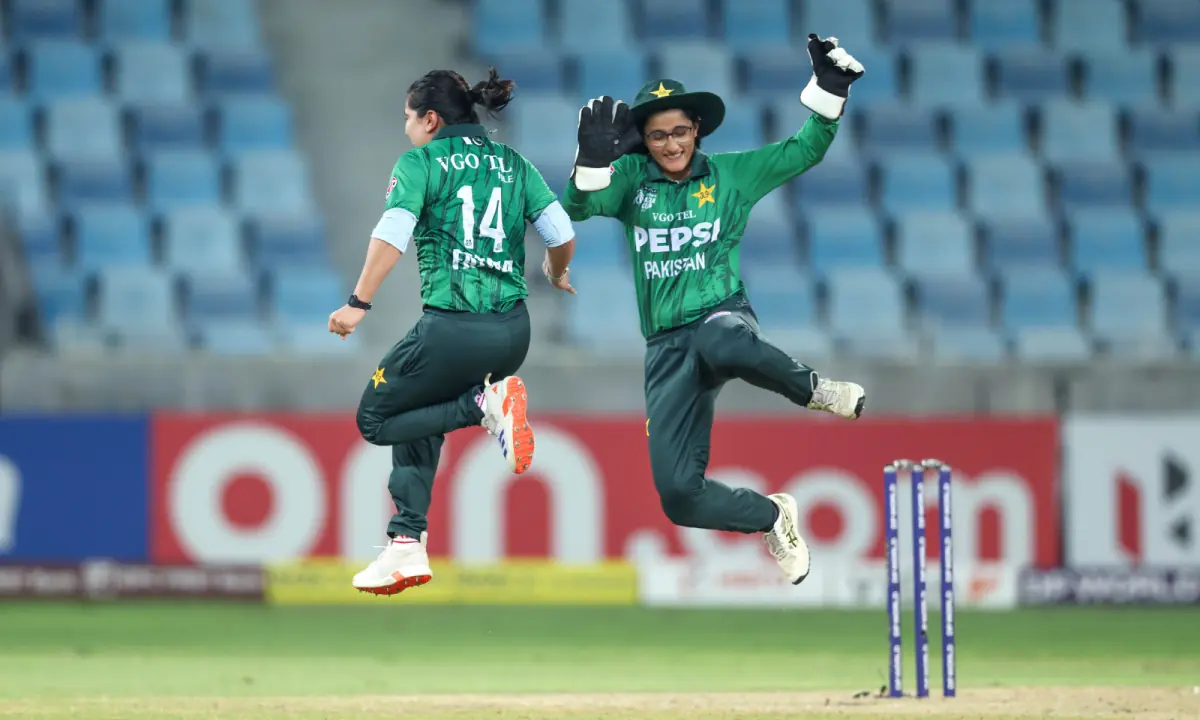
EARLY on Tuesday morning, while most of the nation was asleep, Pakistan beat Bangladesh to win bronze in women’s cricket at the Asian Games in Japan — the country’s first medal in the event since gold in 2014, and its second medal of the ongoing edition overall. It came against an opponent that had denied them at this same stage three years ago, and had beaten them by 23 runs at the T20 World Cup in July. Pakistan had also just lost to Sri Lanka in the semi-final, as they had in the Asia Cup less than 10 days earlier.
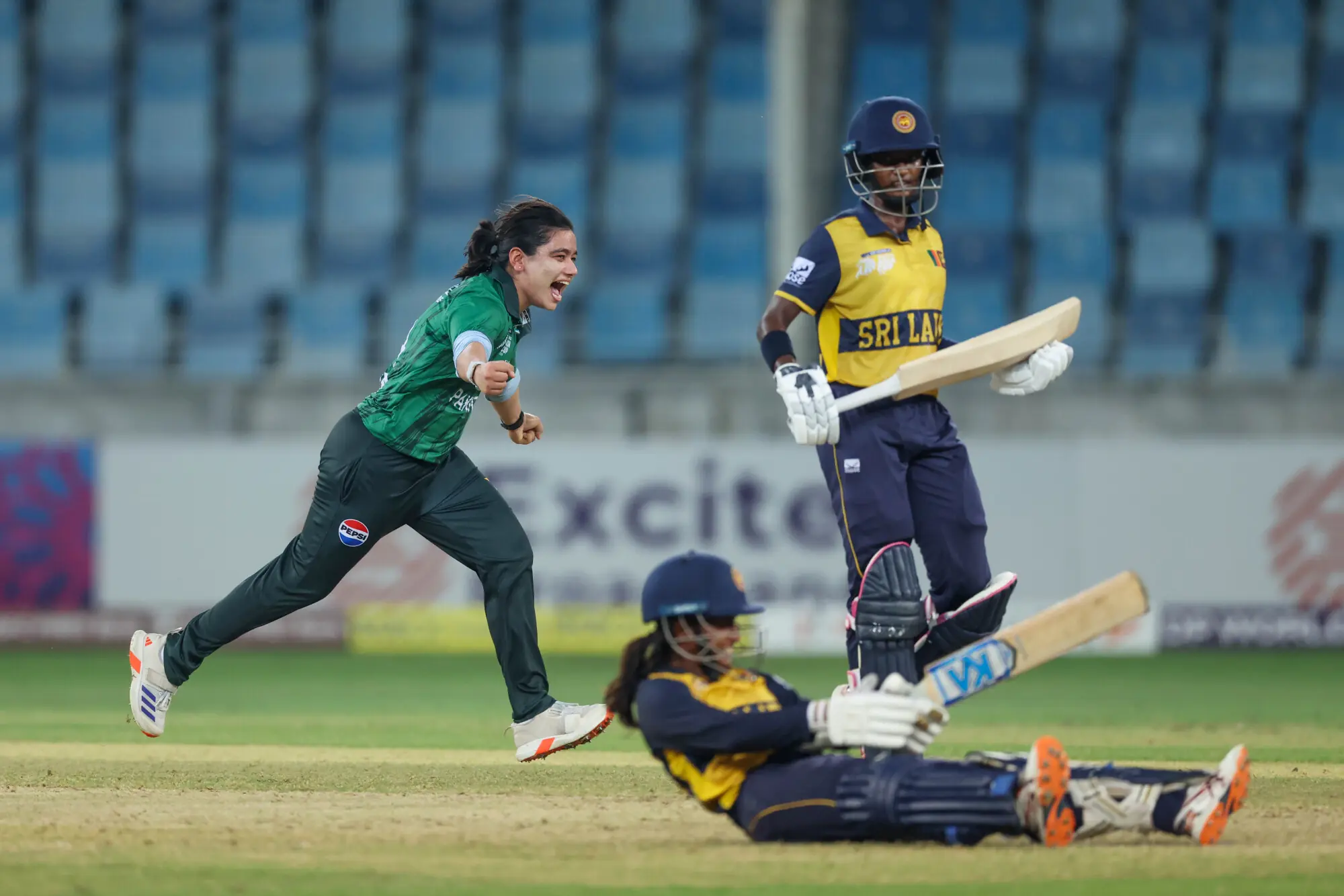
This time, they won. Captain Fatima Sana led her team to the podium — arguably the first tangible reward of her captaincy — much as she has led them through most of the days before it.
Nature of the game
Cricket is technically a team sport, but in practice it behaves like several individual sports wearing a trenchcoat. Master your own discipline — batting, strike bowling, spin — and you can often get away with being less than complete elsewhere (fielding aside). Still, modern cricket rewards being a fortified jack of some trades over a master of one — a bowler who can bat a little, rather than merely survive at No. 11, is simply more useful.
Because individual brilliance carries so much weight in this sport — think Glenn Maxwell’s 200 against Afghanistan, or Ben Stokes’ century at Headingley in 2019 — it’s easy to turn cricketers into heroes.
Every team wants to be a well-oiled machine — clinical fielding, wickets falling on schedule, batting picking up where bowling leaves off. But nothing replaces the pull of a single, standout act of brilliance.
That’s especially true in Pakistan, where the simplest explanation is that the system hasn’t learned to make goodness routine — masla system mein hai (the problem is in the system), as the local diagnosis goes for every sporting failure. Because Pakistan’s brilliant individuals rarely get the infrastructure to sustain themselves, their brilliance never regulates into something as boring as consistency.
It also makes each instance feel larger than life — a heroic knock in England, Fakhar Zaman’s Champions Trophy final century, Naseem Shah’s sixes against Afghanistan, Razaullah’s recent rearguard action on debut.
Factor in the women’s game, where whatever the men lack is lacking tenfold, and every flash of brilliance there is mathematically more pronounced.
Even accounting for all of that, it’s hard to overstate what Fatima Sana is doing right now.
The numbers
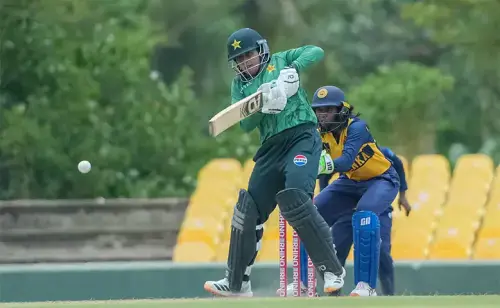
In 2026, Fatima Sana has scored 540 runs in women’s Twenty20 Internationals — the most by any Pakistan batter — at an average of 45 and a strike rate close to 150, second only to India’s Shafali Verma among batters past 400 runs this year.
She has hit more sixes than any team-mate, and in matches Pakistan has won, her average rises to 55.8. She has also been Pakistan’s leading wicket-taker for the year with 31 scalps in 21 matches at 15.6.
The more striking shift isn’t the volume, it’s that she has gone from a bowler with handy batting contributions to a player who could make the side on either skill alone, and done so while carrying the added weight of captaincy.
Learning the job under fire
Fatima made her international debut in 2019 in Potchefstroom, where Pakistan routed South Africa for 63 under Sana Mir, the legend she shares half her name with, who took 4 for 11 that day. Fatima struck on her third ball. In 2021, she became the first Pakistani woman to win the ICC’s Emerging Cricketer of the Year award.
She was named permanent captain in August 2024, ahead of the T20 World Cup, succeeding Nida Dar, Bisma Maroof and Sana Mir — three stalwarts of the women’s game in Pakistan.
But her first taste of leadership came earlier, in a New Zealand ODI in late 2023, when Nida was ruled out with concussion symptoms after a Sophie Devine blow. Fatima, 22 then, walked out at 35-4 — her only prior fifty a solitary knock from earlier that year — and made 90 not out in a 90-run stand with Natalia Parvez, while her opening spell had New Zealand pinned at 13-2.
Pakistan lost by one wicket after a tight lbw shout with no DRS to review it. It was a preview of what her captaincy would often look like.
None of this is to suggest Fatima is the side’s only class act. Sadia Iqbal was briefly the world’s No. 1 bowler in WT20Is. She and Nashra Sandhu, who took the first six-wicket haul by a Pakistan player in an Asia Cup match this month, both sit in the top 10 of the rankings. Opener Muneeba Ali has anchored the side for years despite a recent dip, and a cohort of recent U-19 graduates, alongside young talents like Shawaal Zulfiqar and Aroob Shah among them point to depth ahead.
A captain who keeps doing the improbable
It’s a risky habit, romanticising a captain who keeps punching above her weight in a team sport, and it’s one I’ve had to check myself on every time I write about her — because I don’t want captain and InshaAllah to be Pakistan’s model. But Fatima has pulled off the rescue job often enough, made runs no one else wanted to make, that “punching above her weight” may no longer be the right description.
She might just be that good.
Her first match as captain came at the 2024 T20 World Cup against Sri Lanka, where she top-scored with 30 off 20 at No. 7 and had Chamari Athapaththu out for six, a player-of -the-match performance that led Pakistan to a 31-run win.
Later that tournament, Fatima’s father died in Karachi and she flew home mid-competition, returning to cry through the national anthem before Pakistan’s match against New Zealand. A year later, in a promotional video for the 2025 Women’s ODI World Cup, she recalled his last words to his doctor: “Make me better quickly. My daughter is playing the World Cup. I want to watch her play.”
In April 2025, Pakistan won all five matches at the home World Cup qualifiers under her captaincy; she was player of the match against Thailand (62 not out and 3-39) and finished the tournament just one wicket behind top-scorer Hayley Matthews. That May, she hit the fastest fifty in Women’s T20I history, one that came off 15 balls against Zimbabwe.
The near-misses count too. Earlier this year in South Africa, she walked in at 64-6 and made 90 off 41 — arguably the best innings by a Pakistani this year — before being bowled off the last ball, still visibly hungry for more.
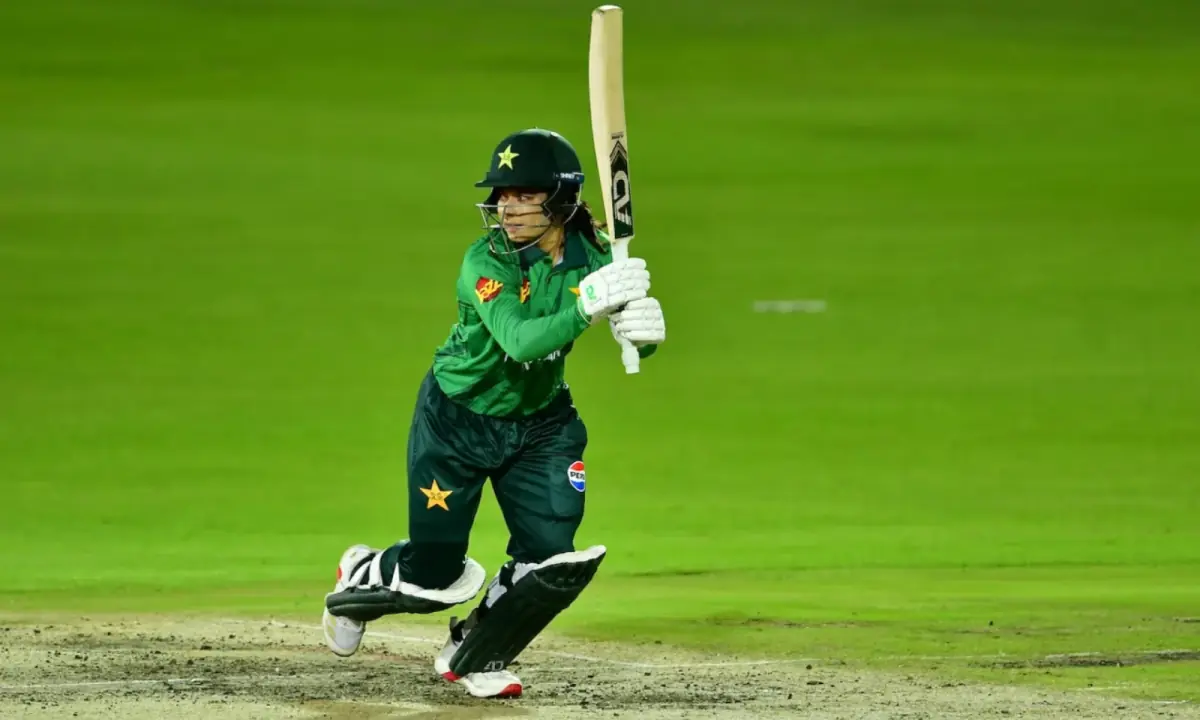
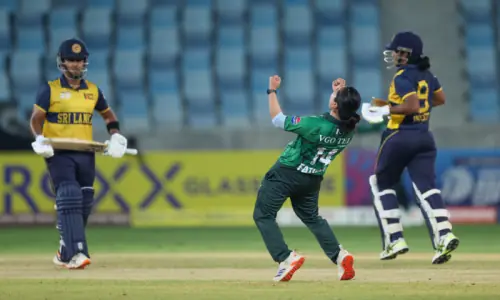
In this month’s Asia Cup semi-final, her unbeaten 47 and four wickets weren’t enough to stop a third straight semi-final loss to Sri Lanka. And against England at last year’s ODI World Cup, in a tournament Pakistan finished winless, she bowled Nat Sciver-Brunt with a nip-backer and had Heather Knight lbw to leave England seven down — only for rain to wash the match, and the points, away.
The real conversations
That rainy day in Colombo may sum up Fatima’s captaincy so far; Pakistan do everything right, she leads them through it, and something still falls short.
There are real conversations to have — about whether she should be batting higher, about not being the only one producing these performances, about a bronze in a four-team-realistic field being, in some sense, an under-achievement.
But Pakistan can’t afford to keep overlooking greatness when it’s standing in front of them —a captain who hangs her head after a match-defining 47 because she wanted more, who stood for the anthem days after bidding the final goodbye to her father. One more Fatima Sana, and Pakistan would have gold.
The author is a lifelong cricket tragic who is constantly fascinated by the intersection of sports, media and culture. She is currently pursuing a Masters in Journalism as an Alfalah Scholar at the Institute of Business Administration, Karachi.