ISLAMABAD: A fundraising event featuring a documentary screening on women’s issues and a blend of mystical music and history was held at the Pakistan National Council of the Arts (PNCA), creating a spiritual ambience and evoking history and culture.
Organised by the Women’s Action Forum (WAF) and activist Nageen Hyat, “Babey Lok — The Mystic Poets of Punjab” featured musical renditions, historical narration, a journey through eight centuries of Punjabi Sufi poetry, and the screening of “Posheeda Qadam (Hidden Footsteps).”
Noted women’s rights and cultural activist and filmmaker Nageen Hyat, in her introductory remarks, spoke about her documentary, made in 2017. She said it felt as fresh as it had a decade earlier because violence against women and young girls continues unabated despite legislation.
Nageen Hyat’s documentary “Posheeda Qadam” (Hidden Footsteps) highlights cyberviolence, misogyny and harassment rampant in South Asian society. Despite legislation aimed at protecting women, Ms Hyat lamented that a lack of implementation meant conditions had deteriorated.
The film features activists, lawyers and politicians, including Kamla Bhasin, Sherry Rehman and Raza Rabbani, discussing why women’s situation continues to worsen.
Ms Hyat emphasised bringing patriarchal narratives to the fore, addressing draconian laws and examining the effects of online harassment. Senator Sherry Rehman, who was present, noted Pakistan’s weakness in policy execution and urged law enforcers to enforce the law in letter and spirit.
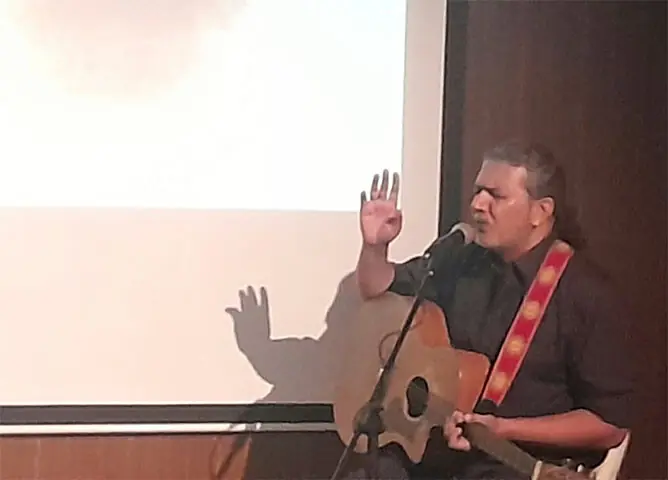
In the second session, Sufi singer and composer Arieb Azhar introduced the audience to Punjab’s spiritual landscape. He narrated the lives and contributions of Sufi saints who spoke for the downtrodden, emphasising harmony and humanity.
From Baba Fariduddin Ganjshakar’s poignant verses and Mian Muhammad Bakhsh’s philosophical allegories to Guru Nanak’s shabads, Azhar rendered selected poems that have resonated across generations.
The presentation traced Sufism’s role in spreading humanist Islam across the subcontinent, where communities fragmented by caste and creed found in Sufi teachings a message of divine love and inclusivity. Punjab became the epicentre of various Sufi orders, particularly the Chishtiya and Qadiriya orders, each contributing to a rich tapestry of spiritual thought.
The poetry of Baba Farid, Guru Nanak, Shah Hussain, Sultan Bahu, Bulleh Shah, Waris Shah, Khawaja Ghulam Farid and Mian Muhammad Bakhsh continues to echo in folk ballads and qawwalis today.
Bulleh Shah emerged as a particularly revolutionary figure — a Sayyid who deliberately chose an Arain master, abandoned his noble lineage and used poetry as a weapon against caste oppression and religious hypocrisy. His verses, including the famous “Bulleya ki jaana main Kaun” (Who knows who I am?), challenged unjust forms of authority and gave voice to the marginalised, including women, Azhar said.
He went on to say that although all the mentioned saints were well versed in Persian and Arabic, they wrote their poetry in various dialects of Punjabi.
Human rights defender Tahira Abdullah commended the evening, noting that the documentary remained topical nine years after its release, and asked: “Where is the promised change?” Senior journalist Kathy Gaanon called the event “fabulous and relevant to the time.”
Published in Dawn, September 25th, 2026