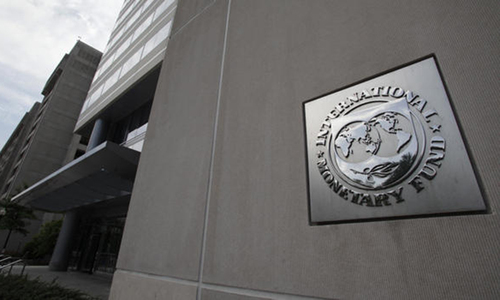
ISLAMABAD/WASHINGTON: Two separate reports released on Tuesday by the International Monetary Fund and the World Bank say Pakistan’s GDP growth rate will gradually accelerate to five per cent by the end of the current financial year, from 4.7 per cent last year. But a closer look paints a mixed picture of what the current financial year will bring.
The IMF sees inflation jumping from 2.9 per cent last year to 5.2 per cent this year, while the Bank sees it at 4.6 percent. The current account deficit is also seen to be widening, to 1.5 per cent of GDP according to the IMF and 1.7 percent according to the World Bank, which attributes the increase to “moderate growth in exports and rapid growth in CPEC related imports.” This figure was 0.9 per cent last year.
The Bank sees Pakistan’s exports returning to positive territory with a modest growth of 0.7 percent this year after three consecutive years of negative growth.
The IMF forecasts were presented in its annual World Economic Outlook report while the World Bank presented its forecasts in the fall edition of its biannual South Asia Economic Focus series. The Fall edition is titled Investment Reality Check and refers to the region as “a global growth hotspot”, saying South Asia has remained resilient to challenges that have weighed on the world economy.
Pakistan’s growth forecast, while higher than last years, still lags behind that of its regional peers as well as the government’s own target of 5.7 per cent for the current financial year. The Bank forecasts India’s growth rate at 7.7 percent by the end of the current fiscal year, and Bangladesh at 6.8 percent.
The Bank said India grew much faster than Pakistan in 2016, but growth in both countries was led by consumption. In Pakistan, investment under the China-Pakistan Economic Corridor is a key driver of next year’s growth, while Indian growth was expected to be ignited by accelerated infrastructure spending and a better investment climate that would help increase private investment and exports.
“A reality check reveals that private investment — a key future growth driver across South Asia — is yet to be ignited to sustain and further increase economic growth,” said Annette Dixon, World Bank South Asia Region’s Vice President.
It said political economy risks were widespread across South Asia, and uncertainty will need to be managed, particularly with a view to creating an attractive environment for domestic and foreign investment alike.
Published in Dawn October 5th, 2016