Defiant Qatar rejects interference as crisis grows
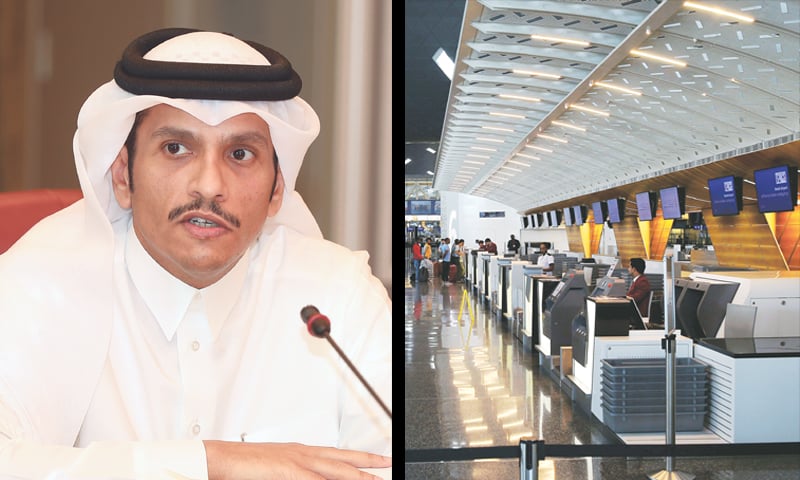

DOHA: Qatar’s foreign minister rejected attempts to interfere in the country’s foreign policy on Thursday, defying calls from the emirate’s Gulf neighbours despite an escalating crisis.
In an interview with AFP, Sheikh Mohammed bin Abdulrahman Al-Thani said calls for a change in Qatari policy from Saudi Arabia and its allies, which cut diplomatic ties with Doha this week, were unacceptable.
“No one has the right to intervene in our foreign policy,” Sheikh Mohammed said.
He also rejected “a military solution as an option” to resolving the crisis, and said Qatar could survive “forever” despite the measures taken against it.
The sheikh’s remarks came as efforts intensified to resolve the feud pitting Saudi Arabia and allied Arab nations against Qatar.
As Kuwait’s emir shuttled between Gulf capitals for talks, US President Donald Trump offered to host a White House meeting if necessary, in a change of heart from his initial support for the Saudi-led boycott.
Kuwait emir leads efforts
Kuwait — which unlike most of its fellow Gulf Cooperation Council members has not cut off ties with Qatar — has been leading efforts to mediate.
Its emir Sheikh Sabah al-Ahmad Al-Sabah held talks on Wednesday with Qatari counterpart Sheikh Tamim bin Hamad Al-Thani, following talks with senior UAE officials and Saudi King Salman.
Trump, who had initially backed the measures against Qatar in a tweet, called Sheikh Tamim on Wednesday with an offer “to help the parties resolve their differences”.
French President Emmanuel Macron has also reached out to Qatar, Saudi Arabia and Iran in a bid to kick off negotiations. Turkey, which works closely with Qatar in the energy sector, has walked a fine line between defending Qatar and abstaining from openly antagonising Saudi Arabia. Ankara hosted Iranian Foreign Minister Mohammad Javad Zarif this week for talks, including on Qatar.
In a sign of support for Doha, Turkey’s parliament on Wednesday approved an agreement to expand the number of troops deployed to a Turkish base in Qatar. The agreement did not detail a timeframe or the number of troops.
Analysts say the crisis is in part an extension of a 2014 dispute, when Saudi Arabia, the UAE and Bahrain temporarily recalled their ambassadors from Doha over Qatari support for Egypt’s Muslim Brotherhood.
A top Gulf official, speaking on condition of anonymity, told AFP a major concern was the influence of Sheikh Tamim’s father, Sheikh Hamad, who had allowed the Taliban to open an office in Doha and helped arm Syrian rebels before abdicating in 2013.
“The previous emir is a big supporter of this whole extremist agenda, so we do have an issue,” the official said.
A senior Emirati official told AFP this week’s decision was not aimed at a change of regime in Qatar but to pressure the country to reshape its policy.
“This is a foreign policy that has gone wild,” state minister for foreign affairs Anwar Gargash said. “We need to put everything in check.” Gargash said the four Arab states seek a “political commitment to change course” by Qatar, including ending its support for the Brotherhood and Hamas.
Qatar’s satellite news giant Al-Jazeera has also emerged as a point of contention in the Gulf. Gargash said “not using the formidable media ownership in promoting an extremist agenda” was a condition for negotiations.
The UAE and Saudi Arabia have banned Al Jazeera from the airwaves and closed the channel’s offices.
Published in Dawn, June 9th, 2017