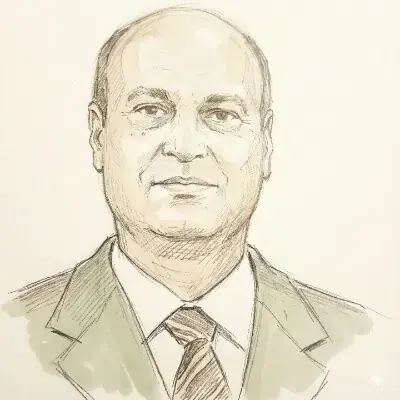
ISLAMABAD: Former senator Afrasiab Khattak on Thursday said the establishment never accepted the 1973 Constitution wholeheartedly and this was why whenever military dictators came to power they suspended the Constitution and introduced a presidential system.
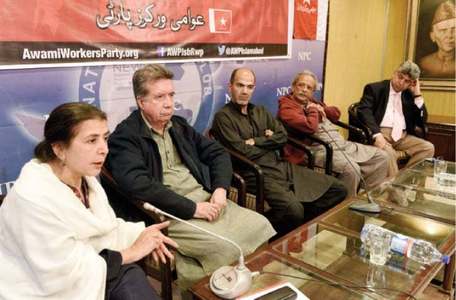
He was speaking at a conference, ‘Exclusionary practices: building resilience and responsiveness in state and society’ organised by Awaaz Forum at a local hotel. Mr Khattak said even when an elected government was in power it was the establishment that made key decisions.
“However, things will change in future because in the past only smaller provinces used to demand democracy but now for the first time a voice is being raised for democracy from Punjab. The establishment cannot afford ignoring such a voice from Punjab because it belongs to Punjab,” he said.
Speaking about women empowerment, he said women should be educated and should get a share from the property of their parents and husbands.
“The social contract between the state and the citizens, which is the Constitution, should be implemented. Unfortunately, people think that the Constitution is a document for lawyers. I suggest that the citizens should also read the Constitution to know about their rights,” he said.
“In the upcoming elections, people should ask the candidates how they would address their issues after coming to power. They should then remind them of their promises if they failed to fulfil the promises,” he said.
Anchorperson Ejaz Haider said across the globe wherever there was democracy the rulers never gave power to the public willingly.
“In Pakistan, most of the issues revolve around security so it becomes very difficult to differ with the view of the establishment. However, it is a fact that Turkey became a big economy of the world just because it decided not to interfere in conflicts and clashes in the region,” he said.
Senator Barrister Aitzaz Ahsan said: “Exclusionary practices are the biggest problem in our society. By excluding women, minorities and persons with disabilities, we deprive them of their potential to contribute to society.”
He underlined the contribution of minorities in society in the fields of law, literature and defence since the creation of Pakistan.
Information Commissioner Punjab Mukhtar Ahmad Ali said there was a need to invest in the education sector so that the citizens could know their rights.
About the allegation that people gave votes for small development works such as carpeting of streets and providing gas connections, he said even then people got some benefits so they should not be declared totally ignorant.
“In Europe, democracy progressed with the passage of time. Similarly, it will take some time for democracy to progress by its own way in Pakistan,” he said.
Dean of Social Sciences at the Lahore University of Management Sciences Prof Dr Kamran Asdar Ali said the state in Pakistan had historically tried to suppress the cultural, ethnic and linguistic identities of the citizens, imposing just one identity on them.
He spoke at length about the silence of history in Pakistan as well as globally whereby certain groups dictated as to what events and struggles should become a part of the documented history.
Chairing the panel discussion on gender and power in Pakistan, columnist and researcher Umair Javed said politics provided us an avenue to tackle exclusionary practices and discrimination. He said state institutions can play a key role in enabling the inclusion of women in politics.
Executive Director of Shirkat Gah, Fareeda Shaheed, said more often than not people thought women empowerment meant providing them certain skills. On the contrary, she said, there cannot be any women empowerment without their participation in the political decision making.
Punjab Commission on Status of Women Chairperson Fauzia Viqar said even though a large number of women participated in the last local government elections, only a handful of them won.
Published in Dawn, February 2nd, 2018