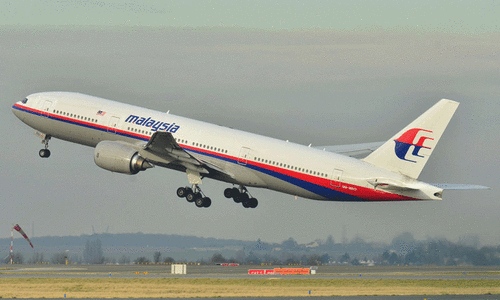
A new scan of the Indian Ocean floor for the missing Malaysia Airlines Flight 370 has searched nearly 80,000 square kilometers (31,000 square miles) since January without finding any sign of the wreckage. But the company looking for the plane, which has been missing for more than four years, said it is still determined to find it.
This comes despite earlier hopes that a 25,000-square-kilometer (9,650-square-mile) area most likely to contain the missing aircraft had been identified.
Ocean Infinity, the American technology company conducting the latest search, said in an update on Monday that it had scanned up to 1,300 square kilometers (500 square miles) per day since launching its mission far off the west coast of Australia in late January. It has searched both inside and outside an area identified by Australian authorities.
Explore: Going underwater with the MH370 search team
“Whilst it’s disappointing there has been no sign of MH370 in the Australian Transport Safety Bureau search area and further north, there is still some search time remaining,” Ocean Infinity chief executive officer Oliver Plunkett said in a statement.
“Everyone at Ocean Infinity remains absolutely determined for the remainder of the search,” he said.
Flight 370 disappeared on March 8, 2014, while en route from Kuala Lumpur, Malaysia, to Beijing with 239 people aboard. No transmissions were received from the aircraft after its first 38 minutes of flight, but it is believed to have crashed in the far southern Indian Ocean based on the drift patterns of crash debris that washed ashore on distant beaches.
The governments of Malaysia, China and Australia called off the nearly three-year official search in January 2017. The Australian Transport Safety Bureau’s final report on the search conceded authorities were no closer to knowing the reasons for the plane’s disappearance or its exact location.
In January, the Malaysian government pledged to pay Texas-based Ocean Infinity up to $70 million if it could find the wreckage or black boxes of the aircraft within 90 days. Ocean Infinity uses up to eight autonomous vehicles capable of operating in depths up to 6,000 meters (19,685 feet), and Plunkett had launched the search by saying his company had “a realistic prospect” of finding the aircraft.
He said on Monday that its technology had performed “exceptionally well” with “significant amounts of high quality data” collected.
The company’s Seabed Constructor research vessel is stopping in the West Australian port of Fremantle for resupply and crew rotation before returning to the search until it’s forced to quit in the southern hemisphere’s winter.
Plunkett’s statement indicated Ocean Infinity’s search could be halted before mid-June due to weather conditions at sea.