OVER the past few weeks, the war drums have been beaten at fever pitch in South Asia.
Fortunately, although the danger of conflict has not entirely subsided, tempers have cooled considerably in the region.
This may be a good time, then, to deconstruct the build-up, climax and climbdown of the latest saga that brought Pakistan and India to the brink of war.
While much has been said about the political, military and diplomatic dimensions of the crisis, greater attention needs to be paid to the coverage of the events by the media, specifically fake news and the “currents of misinformation”, as one New York Times columnist put it, that surrounded the episode.
Propaganda, in times of both war and peace, is not new, as states have employed the media to wage psychological warfare against their opponents.
From Goebbels’ slickly packaged lies about the ‘glory’ of the Third Reich to the regular exchanges of propaganda between the Americans and the Soviets during the Cold War, the modern age is one that has seen misinformation deployed with aplomb.
However, in the age of social media and citizen journalism, fake news has become a powerful and extremely dangerous tool in the hands of state and non-state actors, where misinformation and outright lies are peddled shamelessly to mislead the public.
Lynch mobs have murdered people over WhatsApp rumours while conspiracy theorists and others of their ilk have found an open field for feeding people lies through social media.
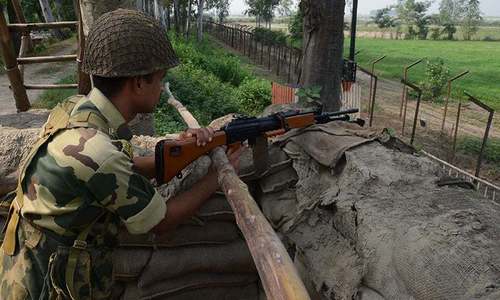
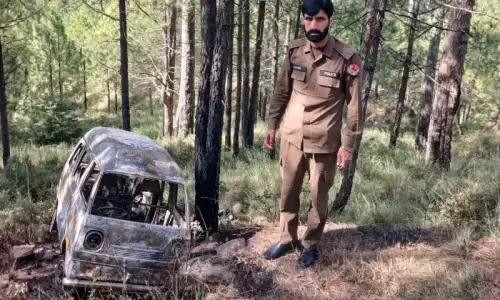
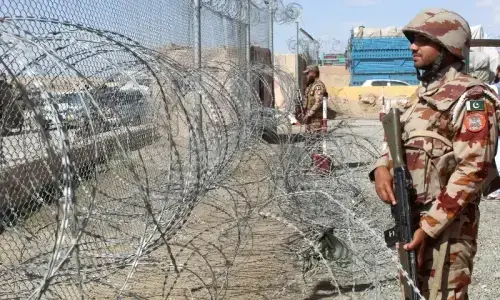
In the context of the recent Pakistan-India stand-off, the media on both sides has indulged in peddling propaganda and airing fake news.
At the outset of the crisis, India claimed killing 300 militants in the Balakot strike; as independent observers later noted, Delhi was hardly truthful in its assertions.
Moreover, armchair ‘generals’ on prime-time talk shows egged on their respective establishments towards war; the Indian media was particularly vitriolic in its shrill anti-Pakistan pronouncements.
It is important, for the sake of peace and the prevalence of truth, for saner minds in South Asia to rationally analyse the media coverage of the recent stand-off.
It should not be forgotten that the basic duty of the media remains truth telling, not leading the dance of war.
There are plenty of journalistic and social forums in South Asia that can be used to discuss how to handle such situations in future, particularly how to counter fake news — and editors can take a leading role in this.
In a region of over one billion people, and with both states possessing nuclear weapons, the stakes are simply too high to let the hawks and armchair warriors of the media play cheerleader for war.
The goal is responsible and accurate reporting, while there should be zero tolerance for fake news and conspiracy theories being trotted out on TV screens and websites in sensitive times.
Published in Dawn, March 11th, 2019