THE KP government is stuck in an unenviable spot. On one hand, the chief minister has taken it upon himself to keep the PTI alive and relevant, by channelling the considerable public sympathy behind it into tangible street power. On the other, he must lead a fightback against the resurgent wave of terrorism in his province, where casualties keep mounting. There is no easy choice for someone who is a provincial chief executive as well as a political leader; in fact, there is no choice at all.
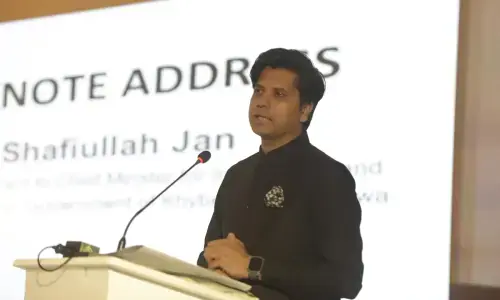
On Sunday, a day after he had announced putting off the opposition’s planned protest march to Islamabad, Chief Minister Sohail Afridi visited Dera Ismail Khan to check in with those wounded in a deadly gun-and-bomb attack in Darazinda over the weekend.
The attack targeted a police and customs check-post and killed at least 12; militants then fired on an ambulance carrying the victims, killing two rescue workers. Accompanied by his predecessor, Ali Amin Khan Gandapur, he asked for his province’s input to be incorporated into the national counterterrorism policy, so it could “reflect the ground realities”. “Peace cannot be established without taking the people of KP into confidence,” he said. Mr Afridi complained about the non-provision of modern weapons and equipment from the centre despite payments being made.
Unfortunately, he could not steer clear of politics and accused “some elements” in the federal government of polarising the country, while daring them to make good on the threat to impose governor’s rule in KP. Federal ministers responded on Monday, slamming the PTI government for “failing to provide leadership, resources or power” to the security forces. “If Pakistan is burning in the fire of terrorism, it is because of KP’s incompetent leadership,” the minister of state for interior remarked, sitting alongside the information minister. The state minister also accused the provincial government of having “a soft attitude” on Afghanistan. The information minister, meanwhile, branded the PTI the ‘B team’ of the banned TTP. “You will now have to decide if you are with Pakistan or with Afghanistan,” he added.
This is extremely poor leadership and statesmanship from top-level leaders at a time when national unity is needed. Pakistan’s fight against violent extremism long predates the current crisis, and it is deeply unfortunate and disingenuous to cast it as a problem created solely by a single political party. That said, the KP government must demonstrate far greater responsibility in meeting the governance challenges it faces. The chief minister cannot lead a political movement at a time when citizens are dying on an almost daily basis. There is an urgent need to tone down the rhetoric and tackle terrorism as a collective challenge for both the affected provinces and the federation.
Published in Dawn, September 29th, 2026