Protests shut roads, offices and schools in Iraq


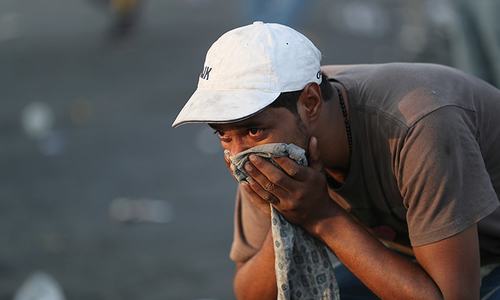
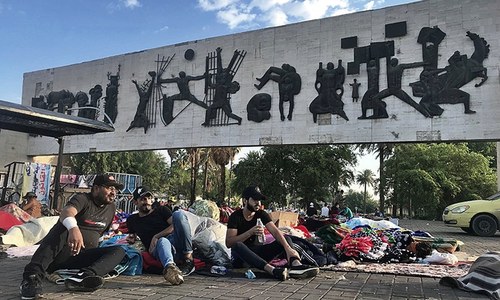
BAGHDAD: Protesters in Iraq’s capital and the country’s south shut down streets and government offices in a new wave of civil disobedience on Sunday, escalating their month-long movement demanding wholesale change of the political system.
Demonstrations broke out on Oct 1 in outrage over rampant corruption and unemployment in Iraq. They were met with a violent crackdown that left dozens dead.
Since resuming later last month, the protests have swelled again with the support of students and trade unions, who jointly announced a campaign of non-violent resistance on Sunday.
In Baghdad, university-age demonstrators parked cars along main thoroughfares to block traffic on the first day of the working week, as police officers looked on.
Other students took part in sit-ins at their schools, and the national teachers union extended a strike they began last week. The engineering, doctor and lawyer syndicates have all backed the protests.
“We decided to cut the roads as a message to the government that we will keep protesting until the corrupt people and thieves are kicked out and the regime falls,” said Tahseen Nasser, a 25-year-old protester in the eastern city of Kut.
“We’re not allowing government workers to reach their offices, just those in humanitarian fields,” such as hospital staff, he said.
In the southern city of Diwaniyah, a banner hanging on the headquarters of the provincial council proclaimed: “Closed by order of the people”.
The government has proposed a string of reforms, including a hiring drive, social welfare plans and early elections once a new voting law is passed. The pledges have had little effect on those on the streets, who have condemned the political class wholesale.
“We decided on this campaign of civil disobedience because we have had it up to here with the government’s lies and promises of so-called reform,” said Mohammad al-Assadi, a government employee on strike in the southern city of Nasiriyah.
Demonstrators there organised sit-ins on the four bridges leading out of the city, as well as its main streets and squares.
Schools and government offices were closed there and across a half-dozen other cities in the south.
In Basra, the oil-rich port city, public schools were shut down for the first time since the movement erupted last month.
Published in Dawn, November 4th, 2019