88.5pc Afghans favour peace talks


WASHINGTON: An overwhelming majority in Afghanistan — 88.5 per cent — either strongly or somewhat support efforts to negotiate peace with the Taliban, according to a new survey released this week.
The Asia Foundation survey for 2019 included 17,812 men and women 18 years of age and older from throughout Afghanistan.
The results showed that 64 per cent of respondents believe reconciliation between the Afghan government and the Taliban was possible.
Regionally, respondents in eastern Afghanistan — 76.9 per cent — and in the southwest — 72.9 per cent — said that reconciliation was possible. Both are Pashtun-dominated areas and include provinces that border Pakistan. Respondents in the Central/Highlands region — 37.7 per cent — were least likely to have said that reconciliation was possible.
The Asia Foundation noted that optimism about Afghanistan’s trajectory peaked at 58 per cent in 2013, but plummeted to an all-time low just three years later amid economic difficulties, troubled elections and radical reductions in foreign troops. Since 2016, however, optimism about the direction of the country has edged up by seven percentage points, almost 25 per cent.
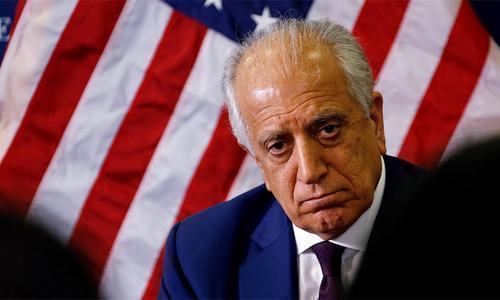
The survey also noted that peace talks appear to be resurfacing with Special Representative Zalmay Khalilzad engaging in meeting with regional representatives from Russia, China, and Pakistan, which may lead to the resumption of US-Taliban peace talks.
Asked if they are aware of efforts to negotiate peace with the Taliban, more than three-quarters — 77.4 per cent — said they were.
Among the 9.7 per cent of respondents opposed to peace talks, almost half — 46.5 per cent — articulated a reason for their opposition. One-third, or 32.4 per cent, said “war will get worse”, 17.1 per cent said “more people will die”, 16.2 per cent said “it’s useless”, 15.1 per cent said “the Taliban are cruel”, 14.3 per cent said “the Taliban are corrupt,” and 11.2 per cent said “Pakistan does not want peace”.
Almost half of respondents, 48.6 per cent, said they feel sufficiently represented in the peace talks.
This year, 33.6 per cent of respondents overall, up substantially from 25.8 per cent last year, said they strongly agreed that anti-government elements who expressed willingness to reintegrate into society should receive government assistance, jobs and housing. Asked
what’s important to protect as part of a peace agreement, 54.7 per cent said protecting the current constitution was very important.
More than half — 53.6 per cent — said a strong central government was equally important. Freedom of speech was important for 46 per cent, and freedom of the press for 46.4 per cent. Just 17.3 per cent overall said the presence of foreign military forces was important to protect.
Published in Dawn, December 6th, 2019