DHAKA: Authorities in Bangladesh in partnership with the United Nations will expand educational programs for hundreds of thousands of Muslim Rohingya children living in refugee camps who are currently receiving only basic lessons, officials said on Wednesday.
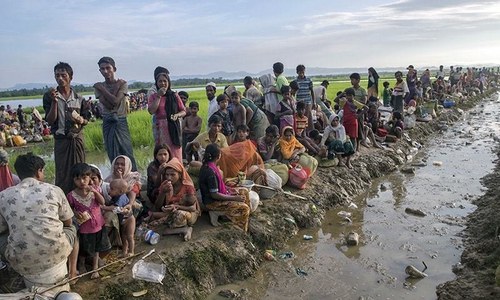
The children, who fled with their families from neighboring Myanmar to the camps in Bangladesh’s Cox’s Bazaar district, now attend about 1,500 learning centers run by Unicef that provide basic education, drawing and other fun activities.
Under the new program starting in April, they will receive a formal education using a Myanmar curriculum from grade 6 to 9, the UN said in a statement.
Mahbub Alam Talukder, Bangladeshs refugee, relief and repatriation commissioner, said the government agreed in principle with a proposal from the UN that the Rohingya children be provided with a Myanmar education.
They will be taught in Myanmar’s language, they will follow Myanmar’s curriculum, there is no chance to study in formal Bangladeshi schools or to read books in the Bengali language, he said by phone. There’s no scope for them to stay here in Bangladesh for long, so through this approach they will be able to adapt to Myanmar’s society when they go back.
The UN said initially 10,000 Rohingya children will be enrolled in a pilot programme using the Myanmar curriculum, which will allow them to fit into the Buddhist-majority nations national educational system when they return to their homeland.
Mostafa Mohammad Sazzad Hossain, a spokesman for the United Nations High Commissioner for Refugees in Dhaka, said a teacher training program is being developed.
“Individuals with appropriate academic qualification and experience will be recruited from both Rohingya and Bangladeshi communities and trained as teachers,” he said in an email.
The decision to introduce formal education was hailed by human rights groups and the United Nations.
“We believe this is a positive step and a clear indication of the commitment by the government of Bangladesh to ensure access to learning for Rohingya children and adolescents, as well as to equip them with the right skills and capacities for their future and return to Myanmar when the conditions allow,” the UN said.
About 400,000 Rohingya children currently live in the refugee camps, and global rights groups have been demanding that the Bangladesh government allow them to have a formal education.
Published in Dawn, January 30th, 2020