KARACHI: “This Shab-i-Barat is the most significant Shab-i-Barat of our lives. This night has come to us in the most difficult and trying of times, and it calls to us to do differently what we have been doing on Shab-i-Barat all these years. Not only are we going to ask Allah Almighty for His forgiveness, we are going to pray for all those affected by Covid-19. May Allah grant us all health and the strength to get over this pandemic. May He forgive us all,” one overheard an elderly woman tell someone while waiting in line outside a superstore on Wednesday.
The distance between them made her speak louder and audible to many other people too
She was talking about the Sindh government’s decision to close all graveyards ahead of Shab-i-Barat. The person she was talking to was a young fellow obviously not very happy about the decision. He also looked a bit out of sorts and confused. “What can the dead do to us? They are gone and buried. They can’t spread the virus, can they?” he said.
But the woman spoke to him patiently while convincing him not to confront the authorities on the matter.
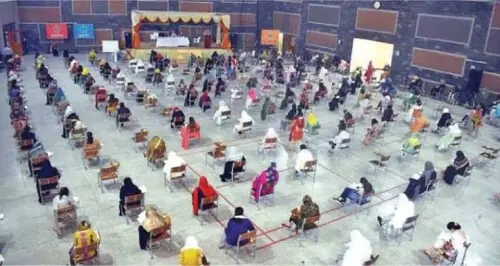
According to the notification no one will be permitted to go to the graveyards and people are being asked to pray at home this year. A ban has also been placed on the congregations of Shab-i-Barat in mosques.
‘Staying indoors and praying at home is the most sensible thing to do in these times’
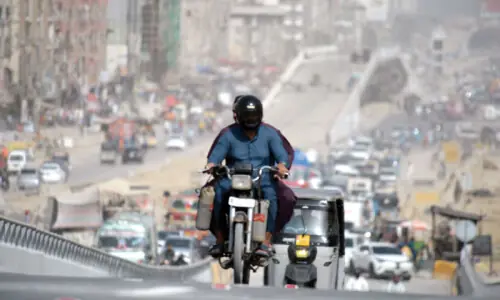
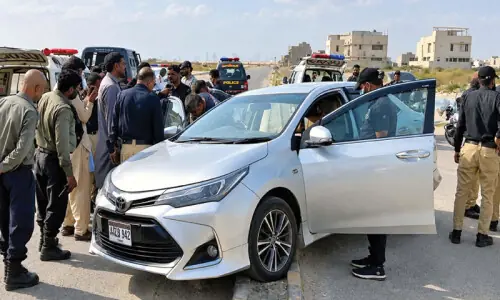
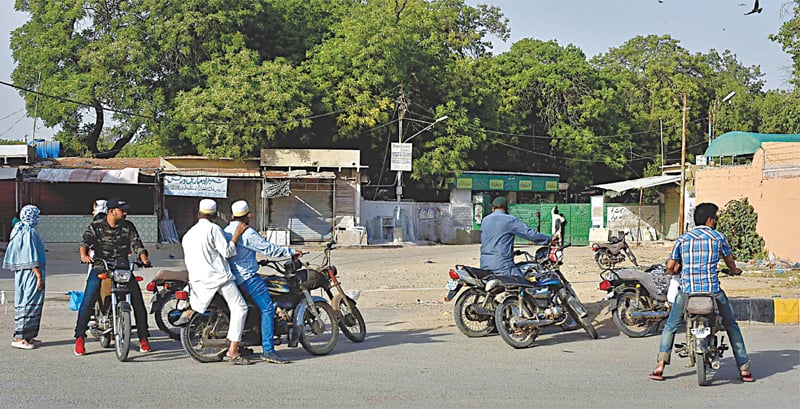
The police deployed on the roads had additional barriers in place to check people’s movements and seemed more attentive than usual, asking everyone where they were headed, especially if they were in an area near a graveyard. They had even closed the Gora Qabristan (Christian Cemetery) on Korangi Road. “It is better to take these measures and precautions than risk possible coronavirus exposure to the people. It is for their own safety and good,” said the police constable near the Christian Cemetery.
Zahid Askari, spokesperson for the Jamaat-i-Islami, also told Dawn that it was better to be safe than sorry. “Taking care and being careful in these days of pandemic is better. The ulema also agree. Staying indoors and praying at home is the most sensible thing to do in these times,” he said.
Mohammad Ameen Qadri of Surjani Town also explained that going to graveyards to visit the graves of loved ones was a tradition. It was never mandatory to do so. “Neither is it farz [mandatory duty], nor is it wajib [an obligation]” he explained. “It is a sunnat of our Holy Prophet [Peace be upon him]. But it is also fine not to follow the tradition this year because if we can live to see the next Shab-i-Barat, we can do so then. And we can visit our relatives’ graves any time after the lockdown is lifted,” he said.
“Because graveyards do tend to get extremely crowded on Shab-i-Barat. It will be a huge risk to go there with so much danger of catching the virus these days.”

Another citizen of Karachi, Ghulam Murtaza Khan said that he had only on Wednesday read an article penned by Mufti Muneeb-ur-Rehman, chairman of the Ruet-i-Hilal Committee, who has also advised people in the piece to stay away from gatherings. “See, you must understand that when you pray you pray to Allah Almighty. You may pray to Him anywhere because He is everywhere. It is only about your haziri [presenting oneself] before God, which is more important, be it anywhere,” he explained.
“Praying with your family around you and praying for their and your own safety in the coming year is what is more important now.”
Many other people Dawn spoke to also said that it was the need of the hour to be sensible and stay at home. “Let’s pray for a good outcome. Let’s pray for a peaceful life,” said a university student.
“Even if not at graveyards or mosques, this is still the best time to pray for your deceased relatives and your family, yourself and the entire world,” she added.
“It is on Shab-i-Barat when God forgives all asking for His forgiveness. It is a big night of blessings and even if we have been unable to pray in the way that we used to, Allah will forgive us,” said the imam of a mosque while urging people to go home.
Published in Dawn, April 9th, 2020