If Afghanistan descends into war, govt won't let fallout affect Pakistan: Fawad


Federal Information and Broadcasting Minister Fawad Chaudhry said on Monday that even if Afganistan descended into a civil war, the government would not let the fallout affect Pakistan.
In a message on Twitter, Chaudhry said the government's policy on Afghanistan was "in Pakistan's interest".
"[We] are monitoring the changing situation in Afghanistan. [We are] trying our best for a way forward in Afghanistan through a peaceful regime that is [formed] on the basis of suggestions from all [stakeholders]," he added.
In another tweet in continuation of the previous one, the information minister recalled that Prime Minister Imran Khan had already clarified that Pakistan could be partners with the US in peace, but not in conflict.
He further stated: "Pakistan's land is not being used against Afghanistan and [we] hope that Afghanistan's territory, too, will not be used against Pakistan."
Chaudhry added that the political and parliamentary leadership in Pakistan had agreed on the "principle of non-interference [in case of Afghanistan]".
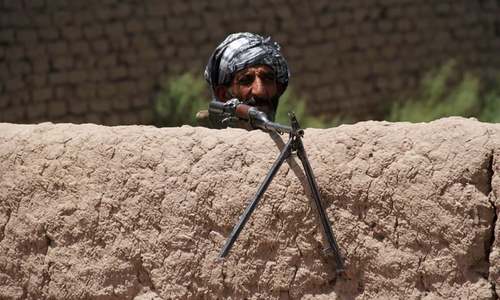
The information minister's remarks are the latest in a string of statements by Pakistani authorities regarding growing concerns over rising violence in Afghanistan and its expected fallout in Pakistan, with the US drawdown in the war-torn country now in its final stages.
On Friday, Foreign Minister Shah Mahmood Qureshi and National Security Adviser Moeed Yusuf had warned while briefing the Senate Committee on Foreign Affairs that the situation was turning volatile in Afghanistan.
Yusuf had termed the situation in the neighbourng country "extremely bad and out of Pakistan's control". He had warned of an impending risk of an attack by Tehreek-i-Taliban Pakistan militants, who, he had said, could enter Pakistan disguised as refugees.
Qureshi had expressed worry that in case of a civil war in Afghanistan, Pakistan would not be able to handle the influx of refugees.
A day later, Inter-Services Public Relations Director General Maj Gen Babar Iftikhar had clarified that Pakistan was a facilitator of the Afghan peace process and not a guarantor.
In an exclusive interview with ARY News on the situation in Afghanistan, the ISPR chief had said there were a lot of aspects to the peace process.
"What I can say right now is that the peace process is at a critical stage and everybody understands that," he had said, adding that Pakistan had tried to move the process forward with "sincerity".
Earlier this month, Prime Minister Imran Khan had called newly elected Iranian President Seyed Ebrahim Raisi and expressed concern over the worsening security situation in Afghanistan, saying the latest developments could lead to serious repercussions for both Pakistan and Iran.
The prime minister had underscored the significance of a negotiated political solution to the conflict in the neighbouring country, and had said latest developments in Afghanistan could result in an influx of refugees towards the bordering areas of Pakistan and Iran.
According to an earlier Dawn report, Islamabad appears not in favour of opening its borders for refugees from Afghanistan and instead is ready to look into the ‘Iranian model’ if the situation demands.
The report cited Interior Minister Sheikh Rashid Ahmed as saying: "We have decided not to open our border for refugees; the aid agencies can help the needy on the other side too [in Afghanistan]. But, if the situation deteriorates, we will establish settlements along the border with strict control and monitoring, prohibiting the entry of refugees into the mainland."
At present, there are two key border crossings between Pakistan and Afghanistan — Chaman in Balochistan and Torkham in Khyber Pakhtunkhwa — besides several small trading points. Most of the border with Afghanistan has been fenced, making illegal movement difficult.
During a more recent media talk, the interior minister had also expressed optimism regarding a political settlement in Afghanistan, saying that he believed that the “new, civilised Afghan Taliban” would prefer talks to guns after Afghanistan suffered violence, civil war and repeated invasions by foreign forces in recent decades.