How tweets, lies from India fuelled Hindu-Muslim unrest in UK's Leicester


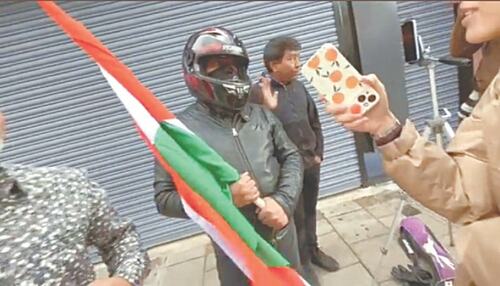
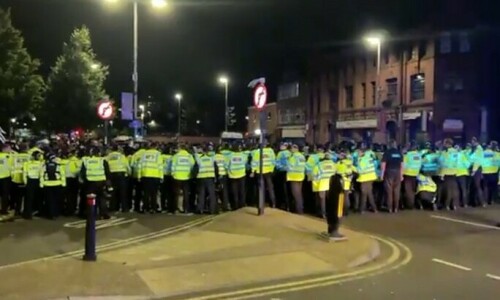
Rumour had it that a Muslim girl had been kidnapped and a Hindu temple had sent masked thugs into combat. Add in local fury over an India-Pakistan cricket match, and Hindu and Muslim men were soon fighting on the streets of central England.
It was a social media storm — mostly cooked up a continent away — that materialised in real life in Leicester, where police made almost 50 arrests and a community was left in tatters.
“It is a powerful illustration of how hashtag dynamics on Twitter can use dubious inflammatory claims to escalate tensions on the ground,” said a spokesperson at fact-checking site Logically, which analysed the posts’ veracity.
Experts say most of the incendiary tweets, rumours and lies came from India, showing the power of unchecked social media to spread disinformation and stir unrest a full continent away.
Some 80pc of tweets came from India during Leicester riots
“I’ve seen quite a selection of the social media stuff which is very, very, very distorting now and some of it just completely lying about what had been happening between different communities,” Peter Soulsby, Leicester’s mayor, told BBC radio.
Rob Nixon, who runs Leicestershire Police, concurred, telling the BBC that misinformation on social media had played a “huge role” in last month’s unrest.
To counter some of these claims, police took to social media themselves, saying they had fully investigated reports of three men approaching a teenaged girl in an attempted kidnap, and found no truth whatsoever to the online story.
“We urge you to only share information on social media you know to be true,” they said. Fact-checkers also found no truth to claims that gangs of masked thugs were bussed into Leicester.
Many of the misleading posts alleging that Hindus and Hindu sites were being attacked came from India, analysis showed. Some 80pc of tweets with geographic coordinates, or geo-tagged information, were connected to India, Logically said.
“The ratio of tweets geo-tagged to the UK versus those geo-tagged to India was remarkably high for what, ostensibly, was a domestic incident,” a spokesperson said.
“The involvement of high-profile figures in India setting the discourse was a key element.”
BBC Monitoring said that more than half of the 200,000 tweets it investigated came from accounts geo-tagged to India, with hashtags such as #Leicester, #HindusUnderAttack and #HindusUnderattackinUK. Twitter did not respond to a request for comment.
The fact-checks confirmed what several Leicester residents had suspected for years: online disinformation and abuse aimed at religious minorities came increasingly from users in India, and platforms were doing little or nothing to check it.
“The events in Leicester did not happen out of the blue,” said Keval Bharadia at the South Asia Solidarity Group, a British community non-profit.
“Friends and family have been sending fake news and misinformation for years. It is a never-ending stream of propaganda from troll armies,” he said.
A spokesman for India’s ministry of home affairs did not respond to a request for comment.
The Indian High Commission in London, in a statement, said it “strongly” condemned the violence against the Indian community in Leicester, and the vandalism of “premises and symbols of Hindu religion.”
Some commentators and rights groups say India’s ruling Hindu nationalist Bharatiya Janata Party has a hand in the social-media warfare that targets religious and ethnic minorities.
In a recent report, Dalit rights group Equality Labs said “nationalistic, Islamophobic, and casteist disinformation” was spreading among expatriate Indians via Facebook, Twitter, YouTube, and thousands of Whatsapp and Telegram chat groups.
Published in Dawn, October 5th, 2022