Shares at the Pakistan Stock Exchange plunged on Tuesday with the benchmark KSE-100 index sliding over 500 points as analysts attributed the slump to weakening macroeconomic indicators and uncertainty over a pending review with the International Monetary Fund (IMF) for the release of a $1.2 billion tranche.
The KSE-100 index closed down 566 points, or 1.36 per cent.
“Weak remittances print, gas price hikes affecting profitability outlook for various industries, and concerns that interest rates could increase ahead of the scheduled MPC [Monetary Policy Committee] meeting in March” weighed down the bourse, according to Raza Jafri of Intermarket Securities.
The government announced Monday a new tariff regime on gas consumption — hiking rates up to 34pc for some industries — as it tries to meet IMF’s conditions for a successful ninth review of its $6.5 billion loan programme.
Pakistan is battling an economic crisis which has seen inflation rocket up and forex reserves dwindle to critical levels.
Last week, the central bank said its reserves had dropped to $2.9 billion, enough to cover less than three weeks of imports.
In order to protect its dollar reserves, the government has imposed import restrictions which are causing difficulties for several industries that are dependent on imports for production.
As a result, multiple companies across sectors have either suspended operations or scaled down production levels, leading to layoffs.
The country desperately needs the IMF to finalise the ninth review of the loan programme it entered with the global lender in 2019, paving the way for the release of a $1.2 billion tranche that will also unlock inflows from other bilateral and multilateral sources.
But an agreement with the IMF has been pending since October last year as the two sides have not been able to reach a consensus in talks that have largely centered around an economic reforms agenda focusing on the energy sector and exchange rate liberalisation.
Last week an IMF delegation that held talks with Pakistani officials for 10 days in Islamabad left without a deal, saying virtual talks would continue.
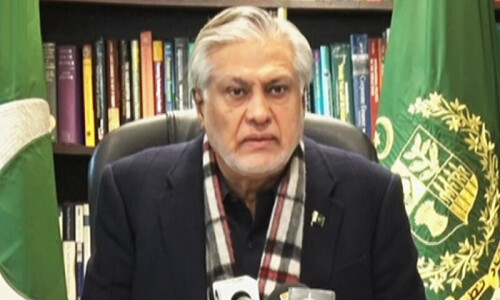
Following the delegation’s departure, Finance Minister Ishaq Dar said the government had ceded to all IMF conditions and would be implementing reforms immediately, including new taxes worth Rs170 billion and hiking gas tariffs, among other things.
“Investor concerns for outcome of proposed Rs170bn mini budget, surge in gas tariff amid slowdown in foreign inflows, circular debt crises, surging debt servicing, and high inflation played a catalyst’s role in [the stock market’s] bearish close,” said Ahsan Mehanti of Arif Habib Corporation.