A RELEASE on bail in Karachi and an acquittal in Peshawar — each one significant in its own right, but coming within 24 hours of each other, they suggest something momentous may be afoot.
Last Tuesday, South Waziristan MNA and Pashtun Tahaffuz Movement leader Ali Wazir won his freedom after more than two years’ imprisonment at the Karachi Central Jail on multiple charges of sedition.
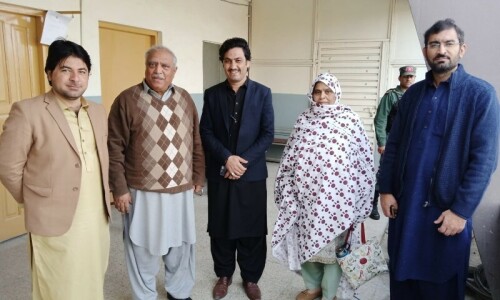
The next day, the parents of rights campaigner and PTM activist Gulalai Ismail were acquitted in a case of treason by a Peshawar ATC. While Mr Wazir had been willfully kept deprived of his liberty in a manner that made a mockery of due process, Ms Ismail’s parents had been hounded by the state on charges of sedition, terror financing and facilitation whose details were so bizarre that they beggared belief.
According to her father, Prof Ismail, it took no less than 167 court appearances before the case came to an end. Had this been a country where the fair name of justice had not been so sullied by an unaccountable state, the elderly couple would never have been put through this ordeal in the first place.
That said, if these twin developments — coming as they do just months after the new army chief took over — signify a change in the state’s approach towards a hitherto unjustly maligned civil movement, it would be a seismic shift.
The PTM should have been seen as a natural ally in the fight against militancy. Indeed, it was the PTM that initially raised the alarm that terrorists were once again finding a foothold in the tribal districts, and it was the first to lead mass protests demanding that the state shake off its apathy and confront the renewed threat of militancy.
Instead, the rights-based movement, which has steadfastly maintained its non-violent approach notwithstanding the persecution that several of its leaders were subjected to, was repeatedly denounced as working against Pakistan’s interests.
On the contrary, its demands are based on the constitutional protections granted to all Pakistani citizens. One of these demands is an end to enforced disappearances, a phenomenon that assumed the scale of an epidemic in the ‘war on terror’— particularly in Balochistan and KP.
The superior judiciary has at different points in time — most recently under Justice Athar Minallah — attempted to push the state into disgorging the individuals it has unlawfully abducted and detained, but its orders have largely been met with stonewalling or indifference.
The frequent sight of missing people’s families holding sit-ins for information of their loved ones is a stain on Pakistan’s global standing and brackets us with some of the world’s most repressive nations. If failed strategies are being abandoned, then the practice of disappearing people must also be revisited — and discarded in perpetuity.
Published in Dawn, February 20th, 2023