Sudan truce extension brings renewed fighting, little aid


KHARTOUM: Fighting flared again in Sudan on Tuesday despite the latest ceasefire pledges of the two warring generals, meant to allow desperately needed aid to reach besieged civilians.
US and Saudi mediators said late on Monday that the army and the paramilitary Rapid Support Forces (RSF) had agreed to extend by five days the humanitarian truce they frequently violated over the past week.
Since the announcement, residents reported “clashes with various kinds of weapons in southern Khartoum”, and fighting in Nyala, South Darfur’s state capital.
“The army is ready to fight until victory,” army chief Abdel Fattah al-Burhan declared during a visit to troops in Khartoum.
Analyst Rashid Abdi dismissed the ceasefire on Twitter, pointing to “a deep disconnect between the reality on the ground in Sudan and diplomacy in Jeddah”, where the mediators had brokered the truce between Burhan and his rival, RSF commander Mohamed Hamdan Daglo.
The mediators admitted the truce had been “imperfectly observed” but said the extension “will permit further humanitarian efforts”.
The war has killed more than 1,800 people, according to the Armed Conflict Location and Event Data Project.
The United Nations says more than a million people have been internally displaced and nearly 350,000 have fled abroad, including over 170,000 to Egypt.
Those still in Khartoum have been hiding from street combat and roaming looters in the capital city of more than five million, nearly 700,000 of whom have fled, according to the UN.
“Looting and robbery have become commonplace in Khartoum, with some areas being entirely stripped of possessions,” said Ahmed Omer of the Norwegian Refugee Council.
Since battles began on April 15, both generals have committed to a series of truces, though the United States and Saudi Arabia said this seven-page deal is different because the warring parties signed it, and there is a monitoring mechanism.
Although some Sudanese have used relative lulls in the fighting to escape, aid has only trickled in.
The UN on Monday warned Sudan has become one of the highest alert areas for food insecurity, requiring “urgent” international action.
Sudan was already poverty-stricken before the war, with a third of its 45 million people relying on aid.
More than six weeks into the conflict, over half the population — 25 million people — are now in need of aid and protection, the UN says.
Among them are 13.6 million children, including 620,000 suffering from severe acute malnutrition, “half of whom may die if not helped in time”, the UN children’s agency said.
“The food assistance that we provided weeks ago was only enough to feed people for a few days” in Madani, the NRC’s Omer wrote on Tuesday in an online testimonial.
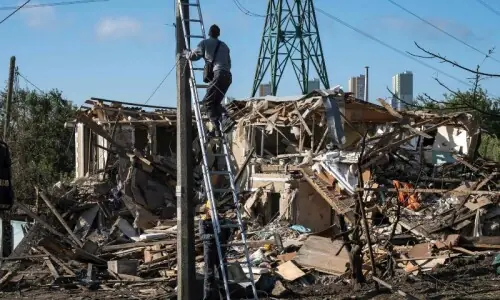
South of Khartoum, Madani quickly became a hub for the capital’s displaced when the war erupted, where people have been forced to “sleep on the ground”, with “sick children, heavily pregnant women, and elderly people in need of life-saving medicines.” Entire districts of Khartoum no longer have running water, electricity is only available for a few hours a week, and three quarters of hospitals in combat zones are out of service.
Fears of ‘civil war’
What few health facilities still operate have practically run out of medicines and equipment and must purchase fuel at up to 20 times its pre-war price to keep generators running.
But with staff and transport blocked by fighting and shipments stuck in customs, aid agencies have so far only managed to deliver relatively small quantities of food and medicine to conflict areas.
On Sunday the UN said 53 trucks with life-saving supplies — around one-third of those planned — had been able to reach their destinations since the truce began.
The fighting sparked mass evacuations of thousands of foreign nationals in the initial weeks, while many abandoned foreign diplomatic facilities were ransacked.
Published in Dawn, May 31st, 2023