Spain defeat England in final of record-breaking FIFA Women’s World Cup


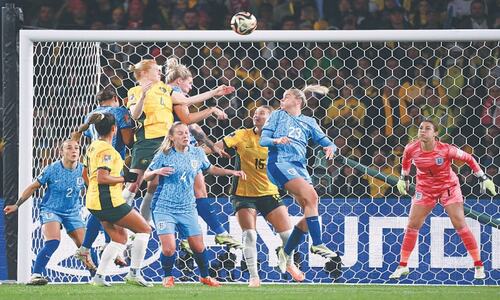
Spain defeated England 1-0 in the Women’s World Cup final on Sunday, capping off a tournament that has broken attendance and TV records and raised hopes of a surge in interest for the women’s game.
Co-hosted by Australia and New Zealand, the ninth edition of the global showpiece event was the first to be held in the southern hemisphere.
While local interest ebbed when Australia exited in the semi-finals, just shy of two million fans will have passed through the gates in nine host cities after Sunday’s final crowd of 75,784 is added to the tally.
An Olga Carmona goal was the difference between the two sides in a pulsating game that saw Spain create the majority of the clear-cut chances.
“We suffered, it was a difficult match [but] we always thought we were going to make it,” Carmona, who was also named player of the match, told Spanish state broadcaster TVE.
La Roja were rocked by a locker room dispute between the squad and coach Jorge Vilda and the Spanish football federation, with some of their best players absent from the tournament as a result.
But despite a shock 4-0 loss to Japan in the group stage, the team has shone throughout the tournament with their brand of attractive, attacking football.
“I can’t imagine how much excitement there will be in Spain,” Vilda told TVE.
“We are going to celebrate here and we don’t know when it will end.”
Festival atmosphere
Thousands of fans milled around Stadium Australia in Sydney hours before kick-off on Sunday, with troupes of drummers and stilt walkers creating a festival atmosphere.
England and Spain were both making their first appearance at a Women’s World Cup final, while England’s wait for a first trophy since the men’s tournament in 1966 goes on.
Women were banned from official facilities in England, the home of the game, until 1970 and have long lagged the men’s team in interest and funding, although that began to change after the Lionesses won the European Championship last year.
England captain Millie Bright told reporters after the final whistle she was proud of the progress the women’s game had made.
“Credit to the tournament, it’s been phenomenal, the crowds that we’ve generated and the support that all teams have and it’s been surreal, it’s been so visible,” she said.
“In terms of the women’s game … I definitely think we’re at our peak.”
Matilda mania
Australia’s semi-final loss to England on Wednesday drew an average of 7.13m viewers on the channels of local broadcaster Seven Network, the highest viewership ever recorded by research firm OzTAM, which launched in 2001.
Matildas — the official nickname for the Australian team — matches sold out months in advance, and organisers expect the average attendance to exceed 30,000.
The last Women’s World Cup in France four years ago attracted more than 1.1m fans to 52 matches with an average crowd of 21,756.
Demand was weaker in New Zealand, whose team went out in the group stages. FIFA gave away thousands of tickets and some games attracted as few as 7,000 fans, although White Ferns matches broke records for a football crowd in the country.
Funding gap
Australia’s players, who lost 2-0 in a third-place playoff match to Sweden on Saturday, will earn $165,000 each in prize money for this tournament, more than 300 times the A$750 ($480) they received for a quarter-final appearance in 2015.
But at the grassroots level, the sport needs more resources, Matildas striker Sam Kerr said after the loss to England on Wednesday.
“We need funding in our development, we need funding in our grassroots,” she said.
“We need funding, you know, we need funding everywhere.”
The Matildas’ World Cup campaign has led to calls for more support for women’s football in Australia, where it lags behind more popular football codes like rugby league and Australian rules.
Australian Prime Minister Anthony Albanese responded on Saturday by promising A$200m for women’s sports in the wake of the Matildas’ run to the semi-finals.
Albanese said the money would be used to improve sports facilities for women and girls, with football tipped to receive “significant resourcing”.
The government also wants to ensure women’s sporting events are available on free-to-air television, after criticism that most World Cup games not involving Australia were behind a paywall.