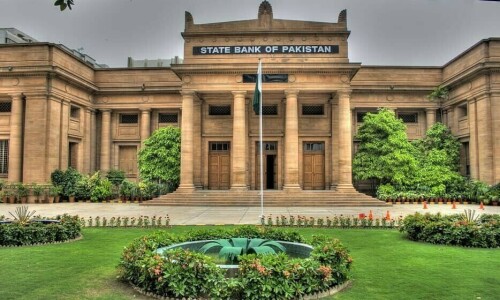
DEFYING market expectations of a 100-300 bps hike in the interest rates, the State Bank has again left its key policy rate unchanged at 22pc.
In support of its decision, the bank cites a declining trend in inflation from its peak of 38pc in May to 27.4pc last month, despite the recent surge in global oil prices that are being passed on to consumers.
Therefore, it maintains that the “real interest rates continue to remain in positive territory on a forward-looking basis”.
The bank is also hopeful that “expected ease in supply constraints owing to improved agriculture output” and the pick-up in high-frequency indicators like the sale of petroleum products, cement and fertilisers, as well as recent administrative actions against speculative activity in the forex and commodity markets will support the outlook.
The SBP dispels concerns over the recent resurgence of the current account deficit of over $800m in July, after posting a surplus for the previous four months, saying it is largely in line with the earlier full-year projection that took into account import growth.
It underscores continued monitoring of the risks to the inflation outlook, and taking appropriate actions to achieve the objective of price stability if required.
At the same time, it urges the government to maintain a prudent fiscal stance to keep aggregate demand in check, “to bring inflation down on a sustainable basis and to attain the medium-term target of 5-7pc by end of fiscal 2025”.
Why is the rate to remain unchanged after it was increased in June to meet a key goal for securing IMF funds?
Any other central bank would have raised the interest rates in view of the consistently elevated inflation, continuous exchange rate depreciation, and falling forex reserves over huge debt payments and weakening capital inflows. But the bank’s reluctance is understandable.
Previous hikes in rates to a multi-decade high of 22pc haven’t helped increase savings, or check consumer spending and inflation. The price rise is faster than rate hikes; the national savings rate is falling; and the government continues to accumulate debt to meet its inelastic expenditure.
Monetary policy as an instrument to check the price hike has lost its effectiveness in the current economic structure and existing political uncertainty.
For the last several years, headline prices in Pakistan are being influenced primarily by cost-pushed administered adjustments of domestic fuel and power prices, with the demand pull coming from the government that remains the largest bank borrower.
Expecting a tighter monetary policy to tame soaring prices is useless without a drastic change in the reckless fiscal behaviour of the government.
Only fiscally responsible behaviour by the rulers can make it easier for the SBP to effectively apply monetary policy tools and check other inflation-producing factors for price stability.
Published in Dawn, September 15th, 2023