Ants truly are extraordinary creatures, with behaviour that is particularly remarkable in adversity. When faced with floods, they don’t falter; they float. Forming rafts with their bodies, they expertly navigate waters that would otherwise drown them. This ingenuity offers a valuable lesson in resourcefulness for Pakistan’s policymakers as they steer through the country’s tough economic landscape.
The Pakistani economy is currently facing its own flood of challenges, impacting everyone from major corporations to daily wage earners. This is underscored by recent data from the Pakistan Bureau of Statistics, revealing a troubling picture. Industrial activity remains subdued, as highlighted by the latest Large Scale Manufacturing Index, which shows a nearly 1 per cent decline for the July to November period compared to the previous year. Meanwhile, consumers are grappling with soaring inflation, persistently hovering around 30pc.
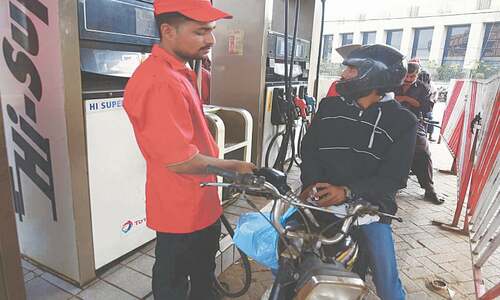
The state of business activities is further mirrored in the import and consumption trends of crude oil and refined petroleum products, which fluctuate with economic cycles. In the last half of 2023, Pakistan’s petroleum import volumes saw a sharp decrease of about 24pc compared to the same period in the previous year, as per a report from a leading brokerage firm. Notably, imports of High-Speed Diesel (HSD), often a gauge for industrial activity, fell by 36pc, while petrol imports saw a 5pc reduction.
HSD is extensively used in heavy machinery and large vehicles across various sectors, from agriculture to logistics, underlining its widespread significance in the country’s commercial operations.
During July-November 2023, Pakistan’s five local refineries operated at only about 57pc of their capacity
A glance at the oil sector’s sales data, encompassing both imported and locally produced petroleum products, also shows a large drop in demand. In the latter half of 2023, oil marketing companies registered a 15pc decline in sales volume. Specifically, petrol and HSD sales dropped by 7pc and 6pc respectively, illustrating the economic slowdown’s tangible impact.
However, every cloud has a silver lining. This dip in petroleum consumption has played an inadvertent but pivotal role in reducing Pakistan’s import bill, consequently bolstering the current account balance.
The second half of 2023 saw the current account deficit fall to $831 million, a striking 77pc decrease from the year before, as reported by the State Bank of Pakistan. This positive shift can be credited in large part to a 15pc reduction in the dollar value of goods imports. The half-yearly figure includes a notable current account surplus of nearly $400m observed in December, a significant improvement compared to the $365m deficit in the same month of the previous year.
The improvement in the current account is a beacon of hope for a nation grappling with financial constraints. While primarily driven by the economic slowdown, it offers a crucial respite in these challenging times. Policymakers now face the task of capitalising on this opportunity, crafting strategies that not only sustain but also amplify the current account benefits, bolstering the country’s foreign exchange reserves.
In the last half of 2023, Pakistan’s petroleum import volumes saw a sharp decrease of about 24pc compared to the same period in the previous year
In the face of adversity, passive acceptance shouldn’t be an option; proactive and intelligent policy-making is crucial to extract the best possible outcomes from this difficult situation. Measures should be focused on reducing imports and boosting exports while steering clear of draconian measures, such as the harsh restrictions on imports, which tend to backfire.
One pragmatic approach could be maximising the domestic production of refined petroleum products by ensuring local refineries operate at full capacity. Given that petroleum product imports are a major drain on dollar reserves, addressing this could be a strategic win for economic planners.
During July-November 2023, Pakistan’s five local refineries operated at only about 57pc of their capacity, figures from the Oil Companies Advisory Council (OCAC) show. This underutilisation not only leads to a heavy reliance on imports but also highlights a key area for policy intervention.
The refinery utilisation rates should ideally hit 90pc to 100pc, particularly during peak demand times (eg during wheat harvesting season). A higher utilisation rate would significantly increase Pakistan’s production of petrol and diesel, reducing the need for imports. The shift towards processing more crude oil, a less expensive alternative to refined products, should deliver substantial forex savings.
In recent years, Pakistan’s oil refining sector has faced a slew of challenges, from highly volatile furnace oil consumption to the devaluation of the local currency, all impeding its performance. The lack of a supportive policy framework for the refining sector only exacerbated these issues.
However, the recent introduction of a new oil refinery policy marks a promising change in direction. It’s crucial for Pakistan to capitalise on this positive trend, developing policies that encourage capacity expansion and technological advancement in the oil refining space.
Such measures could reduce import dependence and, in the longer term, potentially establish Pakistan as a net exporter of refined petroleum products, thus strengthening the current account and fortifying foreign exchange reserves.
Moreover, policymakers must also turn their attention to other key sectors requiring policy intervention. This includes areas like IT and related services, which can boost export earnings, and sectors capable of increasing the production of import-substitution goods, such as mobile phone assembly.
Despite the tough economic situation, there’s room for optimism. Policymakers in Pakistan can draw inspiration from the adaptability and resilience of ants, leveraging the nation’s existing resources efficiently to navigate through these economic challenges.
The writer is a corporate consultant specialising in business and economic issues.
Email: sarfarazis@yahoo.com
X (formerly Twitter): @sa_cubes
Published in Dawn, The Business and Finance Weekly, January 22nd, 2024