IT is usually best not to presume, but given recent developments, one may tentatively hope that the judiciary has finally woken up to the controversies surrounding the general election. Following a series of widely criticised decisions from the Election Commission of Pakistan — each of which, it seems, distorted or subverted the public mandate — the judiciary has finally checked the electoral body for exercising arbitrary control over the democratic process.
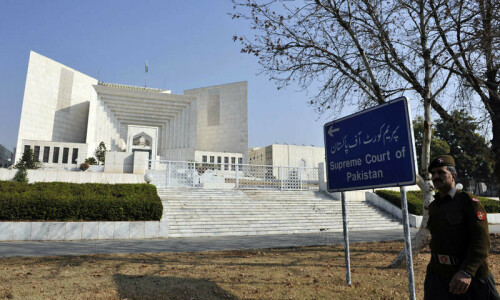
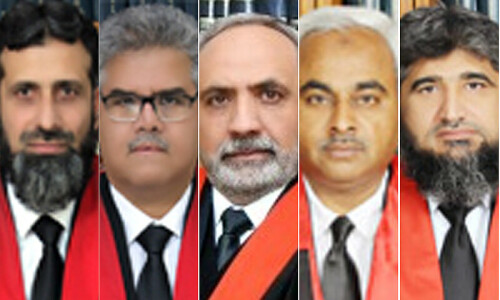
A three-member bench of the Supreme Court admitted a petition this Monday against an ECP decision to give various political parties more reserved seats than they were lawfully entitled to, suspending the decision till further notice. The petition in question was moved by the Sunni Ittehad Council, which has been arguing that the ECP and Peshawar High Court’s denial of its right to a total of 78 reserved seats in various assemblies was unlawful and must, therefore, be reviewed by the apex court.
From the interim order issued by the Supreme Court, it appears that the judges who heard the petition were not inclined to agree with the government and the ECP’s logic regarding why the 78 reserved seats denied to the SIC should be allotted to other parties. During proceedings, the court observed that this decision appeared to have distorted the public’s mandate. Since there was no legal precedent or clear justification for the ECP’s decision, it was agreed that the question would require a constitutional interpretation.
The matter has consequently been remanded to the apex committee of the Supreme Court for the formation of a larger bench. Till the case is decided, the interim order also, in effect, scuppered any government plans to start tinkering with the Constitution thanks to the two-thirds majority it had secured in the Lower House due to the ECP’s decision. This may be for the best.
One of the other big questions at the moment is what is to be made of the Senate elections held recently, in which the lawmakers who currently occupy the challenged seats also voted. In case the Supreme Court strikes down the ECP’s decision, would that mean that the Senate election could be challenged on related grounds? This could prove to be a major headache for the government, as it would further undermine its already questionable legitimacy. If such a situation comes to pass, those affected will only have the ECP to blame.
The truth is that the entire process — from polls, announcement of results, formation of assemblies and elections to the Senate — has been mishandled. The electoral watchdog has been so busy finding faults in and imposing penalties on one party that it has been unable to reflect on the many disasters it has wrought in the process. It should deal with the consequences itself.
Published in Dawn, May 8th, 2024