Flash floods kill 50 in western Afghanistan


Flash flooding has killed at least 50 people in western Afghanistan, provincial police said on Saturday, a week after hundreds were washed away in the north of the country.
Friday’s flooding also destroyed about 2,000 houses and damaged thousands more homes and businesses, Ghor police spokesman Abdul Rahman Badri said.
The fresh flooding in the country — which is highly vulnerable to climate change — comes as survivors of the May 10 flash floods in northern Baghlan province continue to search for missing relatives.
“Fifty residents of Ghor province were killed by the floods on Friday and a number of others are missing,” Badri said.
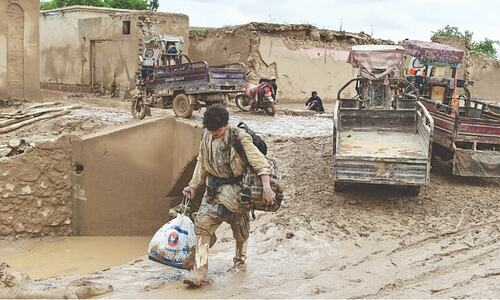
“These terrible floods have also killed thousands of cattle… They have destroyed hundreds of hectares of agricultural land, hundreds of bridges and culverts, and destroyed thousands of trees,” he added. Major roads into and within the province were blocked.
Abu Obaidullah, the head of the province’s disaster management department, said it was an “emergency situation”.
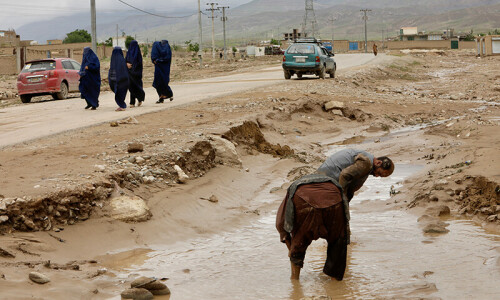
“The floods hit several districts in the province, including the capital Chaghcharan, where the streets “are full of mud”, Obaidullah said. “The situation is really concerning,” he told AFP, adding that victims were in need of shelter, food and water.
‘Exceptionally vulnerable’
The UN’s World Food Programme (WFP) and Taliban officials said more than 300 people died as a result of the flood disaster earlier this month that left homes and roads coated in thick mud.
The destruction of roads and bridges hampered rescue efforts, with United Nations agencies and Taliban authorities warning the death tolls would rise.
Afghanistan, which is “exceptionally vulnerable to flooding” has seen above-average rainfall this spring, Mohammad Assem Mayar, a water resource management expert, said in a recent Afghanistan Analysts Network report.
From mid-April to early May, flash flooding and other floods had left about 100 people dead in 10 of Afghanistan’s provinces, authorities said. Farmland has been swamped in a country where 80 per cent of the more than 40 million people depend on agriculture to survive.
The rains come after a prolonged drought in Afghanistan, which according to experts is one of the least prepared nations to tackle climate change impacts.
The country, ravaged by four decades of war, is also one of the world’s poorest.
The WFP warned that the recent floods have compounded an already dire humanitarian situation.