FINANCE MINISTER Muhammad Aurangzeb on Thursday expressed his ‘resolve’ to increase Pakistan’s tax-to-GDP ratio to 13pc in the next three years. Addressing a post-budget media briefing, he said: “Our basic principle while framing this budget was to expand the tax base.”
Given this statement and his earlier declaration at the launch of the Economic Survey that “countries cannot be run on charity but taxes”, it was expected that the new budget would have significant measures to broaden the tax base. The reality of the taxation measures announced by him in the budget, however, does not match his rhetoric.
Before we delve into the reasons for this gap, it should be acknowledged that the budget does propose the revocation of certain tax exemptions being enjoyed by certain privileged sectors of the economy. That, though, has been done to raise the annual tax collection to Rs12b.97tr, a sine qua non to qualify for the three-year Extended Fund Facility being sought from the IMF.
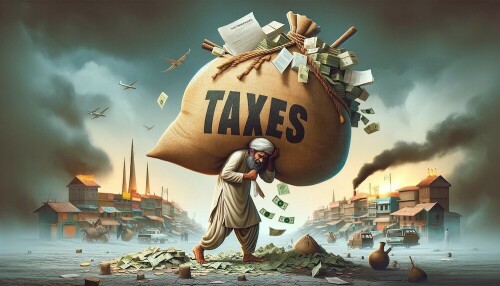
One does not have to be a financial wizard to see that the budget still follows the same tried, tested, flopped and, therefore, oft-rejected trope of milking those already in the tax net even more. A large part of the additional revenue measures being proposed target the same two segments — the salaried classes and documented businesses — which already pay the bulk of personal and direct taxes.
At best, the government can only hope that its proposal to levy higher taxes on non-filers trying to buy or sell property will force them to join the tax net voluntarily. At worst, it will force more people to engage in cash transactions and, thus, increase tax evasion.
The next budget, in fact, reflects the ruling PML-N’s political concerns more than its economic reform agenda. For one, it has left its traditional support — traders — virtually untouched. Nothing except such political imperatives explain why the finance minister did not levy any direct taxes on retail trade even when the government has talked a lot about it of late.
Similarly, while there is a proposal to levy federal excise duty on property, real estate developers and agents have been shielded from any additional tax burden. This, too, stems from political expediency: the PML-N cannot afford to anger the middle class other than those sections that have already turned against it.
The budget, therefore, lacks both imagination and courage. It shows that the finance team did not envision any structural changes to broaden the tax-to-GDP ratio and, instead, chose to stick to old formulae. It also shows that the ruling party is scared of taking bold steps lest it loses whatever little public support and legitimacy it has. Consequently, the budget it has presented signifies nothing but a lost opportunity to fix the system.
Published in Dawn, June 14th, 2024