BRUSSELS: The European Union held its first summit with the Gulf states on Wednesday as part of diplomatic courting of less familiar friends and to enlist international support for isolating Russia.
Since Moscow’s invasion of Ukraine, the 27-member EU has reached out to other regional blocs, holding its first summit with the Association of Southeast Asian Nations and its first in eight years with the Community of Caribbean and Latin American Countries.
Its aim in meeting the six wealthy Arab states in the Gulf Cooperation Council was to deepen cooperation and recognise those countries’ influence, particularly in conflicts in Ukraine and the Middle East.
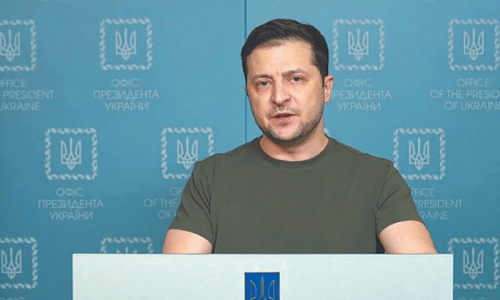
European Commission President Ursula von der Leyen urged Gulf states to use their influence to bring peace to Ukraine.
“I know how sensitive you are to the idea of sovereignty, and I am confident that we can work together and rely on you to stop this illegal Russian war,” she told the EU and Gulf leaders, including Saudi Crown Prince Mohammed Bin Salman.
In a joint statement at the end of the summit, the two sides said they would revive talks launched 35 years ago on a free trade agreement but suspended in 2008. They will also hold biennial summits, the next in Saudi Arabia in 2026.
The EU partnership with Bahrain, Kuwait, Oman, Qatar, Saudi Arabia and the United Arab Emirates would seek to boost cooperation in clean tech, critical minerals needed in the green transition, renewable energy and hydrogen production.
Brussels had wanted the GCC partners to agree on strong language on Russia’s invasion of Ukraine. The final statement affirmed the sovereignty of states, condemned attacks against civilians and critical infrastructure and deplored the “prolonged war”.
Russia was only mentioned in a reference to a United Nations resolution and a demand that it withdraw its forces from Ukraine.
Qatar’s Emir Sheikh Tamim Bin Hamad Al Thani said closer relations should mean greater adherence to international justice and “away from the policies of double standards”.
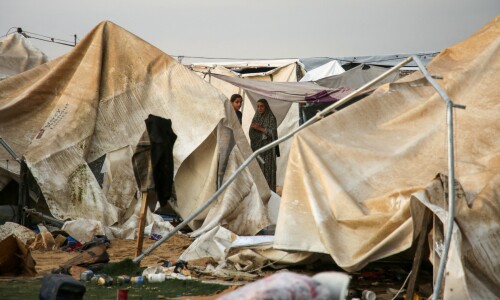
Critics in the Global South say EU nations repeatedly call out Russia over violations of international law in the Ukraine conflict, but fail to apply the same standards to Israel.
Published in Dawn, October 17th, 2024