Despite security concerns for Chinese nationals in Pakistan, investment from China in the automobile sector has picked up recently. All eyes are now on the entry of new electric vehicles (NEVs), especially BYD and its electric vehicle (EV) collaboration with Mega Motor Company (MMC), an associated company of the Hub Power Company Limited (Hubco).
They are establishing a plant near Karachi with an annual capacity of 50,000 units and an investment of about $150 million.
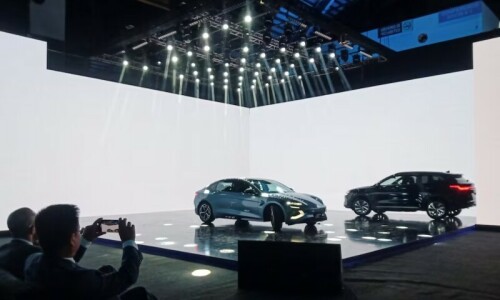
Prior to BYD, Regal Automobiles Industries Limited recently unveiled Pakistan’s first locally assembled electric sport utility vehicle (SUV), the Seres 3 — priced at over Rs8m — at its Lahore plant.
Furthermore, on December 5, 2024, Dewan Farooque Motors Limited informed the Pakistan Stock Exchange regarding the assembly of more than 100 units of Horni EV and handing them over to Eco Green Motors Limited for deliveries to customers.
‘Selling 50,000 units a year in the first phase would save $250-300m on the conservative side of fossil fuel imports’
However, in a difficult and insecure political environment, it seems that Chinese investors and their local partners in Pakistan, though apparently concerned, are more determined to change the landscape of the auto market from fossil fuel to electrified vehicles.
As per media reports, at least two Chinese nationals were killed with a third injured after their convoy was attacked near the Jinnah International Airport on October 6, while in March this year, five Chinese engineers and their Pakistani driver were killed in an attack near the China-backed Dasu hydrocarbon project.
On rising security challenges to the Chinese investors and people, Managing Director, Seres Pakistan, Muhammad Adeel Usman said Chinese have always been very supportive and helpful in understanding the broader issues facing Pakistan and have invested heavily in projects under the China-Pakistan Economic Corridor and private investments.
“Recently, Chinese investors have also become cautious and are now concerned about their security, and they have slowed down direct investments,” he claimed. The long list of requirements for Chinese to travel in Pakistan includes having a bulletproof car, a certain number of security officers and prior reporting to the police. Such rules and requirements are not feasible for either the Chinese or their local partners, he added.
Chinese companies are relocating their investments/businesses to different countries due to the imposition of high import tariffs from the USA and some other countries, opening up opportunities for Pakistan. Many Chinese EV companies planning to set up shop in Pakistan are hesitant due to sudden policy shifts and missed commitments by the government, he continued.
For instance, the government’s efforts to introduce a new EV policy for 2025-2030, which promotes and incentivises completely built units (CBU) by lowering duties and taxes, overlaps with the last auto policy still in effect. Many companies invested under the Auto Industry Development and Export Policy (AIDEP) 2021-26with the commitment that the policy will be enforced till June 2026. Overlapping the old policy with a new one before its expiration is just one of the many issues that make new entrants hesitant to invest in the Pakistani market, Mr Usman opined.
“Our EV market will benefit exponentially from new EV players, which would result in improved charging infrastructure and competitive pricing for Pakistani consumers,” he said.
Seres 3 has been rolled out recently. The company has planned to deliver to the customers who have pre-booked. “We have over 300 plus pre-bookings, and new orders will be taken soon after our launch in January 2025,” he said.
On December 5, 2024, Hubco in a stock filing, said that Hub Power Holding Limited, a wholly owned subsidiary of Hubco, has entered a shareholders’ agreement with Mega Conglomerate (private) Limited MCPL, pursuant to which MCPL will subscribe to and become a 50pc shareholder of MMC to strengthen the business venture with BYD.
The auto market is also a-buzz with talk that Hubco — currently engaged in independent power producer agreements with the government — is being facilitated or BYD China is being given preferential treatment. The government seeks to renegotiate or scrap contracts with IPPs to address financial challenges and streamline the power sector. In October, Hubco initiated a negotiated settlement agreement with the government.
“These impressions are unfounded. BYD, through a partnership with MMC, is launching products in Pakistan as the country presents a big opportunity for the company as part of their goals to expand overseas,” the spokesman said.
Pakistan has about 4m cars registered and driven on the roads. Even with 3,000-5,000 New Energy Vehicle (NEV) CBUs, it represents less than 0.1 per cent of the current units in operation. The real push will come when large local assembly operations in Pakistan for NEV are operational, he said.
The introduction of NEVs will directly reduce Pakistan’s fuel import bill. Currently, Pakistan spends about $16 billion on imported fuel annually, of which an estimated $12bn worth of fuel is for the transport sector. As per the spokesperson, “selling 50,000 units a year in the first phase would save $250-300m on the conservative side on fossil fuel imports”.
Upon launching expensive EVs for the country’s elite class, the spokesperson elaborated that BYD is initially entering Pakistan with a limited number of products (during the CBU phase) and the company would ensure that it is able to capture more market segments with a broader product base later on.
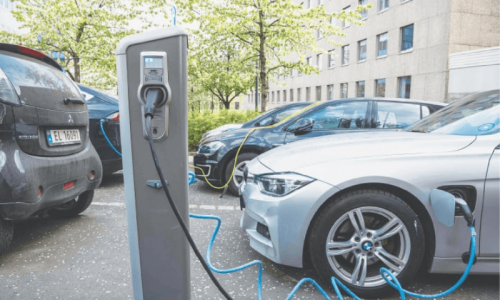
He further highlighted that charging infrastructure is critical for mass adoption of NEVs in Pakistan, especially for low-priced models where customers might rely more on commercial charging. Hubco Green hopes to establish a robust universal charging infrastructure in Pakistan to help with further adoption.
Published in Dawn, The Business and Finance Weekly, December 9th, 2024